Fix Master Appliances

Tag: washing machine repair

  • When to Replace vs Repair a Washer: Smart Homeowner’s Guide

    When to Replace vs Repair a Washer: Smart Homeowner’s Guide

    You should repair your washer if it is less than 7 years old, the repair cost is low, the problem is small, and parts are easily available. You should replace your washer if it is more than 10 years old, repairs are expensive, it breaks down again and again, or it has safety issues like burning smell, sparks, smoke, or major leaks.

    Why This Decision Matters

    Many people choose the cheapest option without thinking about the future. A small repair on a good washer can be a smart choice. But spending a large amount on an old and weak washer can become a waste of money. If the machine is already noisy, inefficient, rusty, or close to the end of its life, another problem may appear soon after the first repair.

    The right choice depends on washer age, repair cost, new washer price, problem type, and overall condition.

    The 50% Repair Rule

    The 50% rule is one of the easiest ways to decide. If the repair cost is less than 50% of the price of a similar new washer, repair may be worth it. If the repair cost is 50% or more, replacement is usually better.

    For example, if a new washer costs $800 and the repair is $200, repairing makes sense. But if the repair is $450 or $500, buying a new washer may be smarter. A new washer also gives you a fresh warranty, better performance, and peace of mind.

    When You Should Repair a Washer

    Repair is usually the best option when the washer is still new or in good condition. If your washer is under 5 years old and has not had many past problems, it is usually worth repairing. Common repairable problems include a clogged drain hose, blocked pump filter, broken belt, faulty lid switch, damaged door latch, or loose hose.

    A washer that does not drain may only need filter cleaning or a drain pump repair. A washer that shakes too much may only need leveling or a smaller laundry load. A washer that does not start may have a door lock or power issue. These problems are often cheaper than replacement.

    You should also repair the washer if it is still under warranty. Before paying a technician, check your purchase receipt, warranty card, or manufacturer website. Some repairs may be covered fully or partly.

    When You Should Replace a Washer

    Replacement is usually better when the washer is old and the repair is expensive. If your washer is more than 10 years old and needs a major repair, it may not be worth spending money on it. Older washers often develop repeated problems because many internal parts are already worn.

    You should replace your washer if it has a damaged motor, cracked tub, bad drum bearing, failed control board, severe rust, or repeated water leaks. These repairs can be expensive, and sometimes the cost comes close to buying a new machine.

    Safety problems are also a strong reason to replace a washer. If you notice burning smell, smoke, sparks, or water leaking near electrical parts, stop using the machine. Unplug it and call a qualified technician. If the washer is very old, replacement may be the safer choice.

    Washer Age Guide

    If your washer is 1 to 3 years old, repair it unless the damage is very serious. It should still have many useful years left.

    If your washer is 4 to 7 years old, repair is usually a good choice for small and medium problems.

    If your washer is 8 to 10 years old, compare the repair cost with the price of a new washer before deciding.

    If your washer is more than 10 years old, replacement is often better, especially if it has already needed repairs before.

    Common Washer Problems: Repair or Replace?

    If your washer is not draining, the problem may be a clogged hose, blocked filter, or faulty drain pump. This is usually repairable.

    If your washer is not spinning, it may be an unbalanced load, broken belt, lid switch issue, motor fault, or control board problem. Small issues are worth repairing, but motor and control board problems on an old washer may not be worth fixing.

    If your washer is leaking, check the hoses, door gasket, and water connections. Small leaks can be repaired. But if the tub is cracked or leaks keep coming back, replacement may be better.

    If your washer makes a loud grinding or roaring noise, it may have bad bearings or drum problems. These repairs can be costly, especially in front-load washers.

    Check Before Calling a Technician

    Before spending money, do a few simple checks. Make sure the washer is plugged in. Check the circuit breaker. Confirm that water valves are open. Look for a blocked or bent drain hose. Make sure the washer is level. Try a smaller load if the machine is shaking.

    Do not open electrical parts yourself. If you smell burning, see sparks, or notice water near wires, stop using the washer and call a professional.

    Final Verdict

    The best way to decide when to replace vs repair a washer is to look at age, repair cost, safety, and condition. Repair a newer washer with a small problem. Replace an old washer with expensive repairs, repeated breakdowns, poor performance, or safety risks. In simple words, spend small money on a good washer, but do not spend big money on a machine that is already near the end of its life.

    FAQs

    1. Is it worth repairing a 10-year-old washer?

    A small repair may be worth it, but major repairs like motor, drum, or control board replacement are usually not a good choice.

    2. How much is too much for washer repair?

    If the repair costs 50% or more of a similar new washer, replacement is usually better.

    3. Should I replace my washer if it is not spinning?

    Not always. It may be a simple issue like an unbalanced load or broken belt. But if the motor or control board is bad, replacement may be better.

    4. What washer problems are usually worth fixing?

    Clogged drains, faulty hoses, door latch issues, belts, filters, and minor pump problems are usually worth fixing.

    5. What washer problems are not worth fixing?

    Cracked tubs, bad bearings, failed motors, repeated leaks, severe rust, and expensive control board problems are often not worth fixing on old washers.

  • Emergency Washer Repair Guide | Fast Washing Machine Help

    Emergency Washer Repair Guide | Fast Washing Machine Help

    Emergency washer repair is needed when your washing machine leaks, smells like burning, will not drain, stops mid-cycle, refuses to spin, shows repeated error codes, or creates loud grinding noises. First, turn off the washer, shut off the water supply, unplug it if safe, clean standing water, and avoid running another cycle. If the issue involves water leakage, electrical smell, smoke, sparks, locked door, or drainage failure, call a professional washer repair technician immediately.

    Emergency Washer Repair Guide

    A washing machine problem can quickly disturb your daily routine. One minute your washer is running normally, and the next minute there may be water on the floor, clothes trapped inside, or a burning smell coming from the machine. These problems should not be ignored because they can lead to water damage, electrical hazards, or expensive appliance failure.

    Emergency washer repair is important when the issue is urgent and cannot wait for normal maintenance. Some small problems, such as an uneven load, can be fixed at home. But serious signs like leaking water, smoke, sparks, loud grinding, or a washer full of standing water need quick action.

    What Is Emergency Washer Repair?

    Emergency washer repair means fast repair service for a washing machine problem that may damage your home, create safety risks, or stop your laundry completely. It is different from normal washer maintenance because the problem needs immediate attention.

    Common emergency washer problems include:

    • Washer leaking water
    • Washer not draining
    • Washer not spinning
    • Burning smell from washer
    • Washer door locked
    • Loud banging or grinding noise
    • Washer tripping the breaker
    • Repeated error codes
    • Washer stopping mid-cycle

    If your washer shows any of these signs, stop using it until the problem is checked.

    What to Do First in a Washer Emergency

    Before calling a washer repair service, take these simple safety steps.

    First, stop the washer cycle. Press pause, cancel, or power off. Do not force the door open, especially if it is a front-load washer and water is still inside.

    Second, unplug the washer if it is safe. If there is water near the plug or outlet, do not touch the cord. Instead, turn off power from the breaker if you can do it safely.

    Third, turn off the water supply valves behind the washer. This helps prevent more water from entering the machine if the washer is leaking or filling by itself.

    Fourth, clean standing water with towels or a mop. Water can damage flooring, cabinets, walls, and nearby electrical items.

    Finally, note the problem. Write down the error code, sound, smell, or exact issue. This helps the technician diagnose the washer faster.

    Washer Leaking Water

    A leaking washer is one of the most urgent washing machine problems. Even a small leak can turn into serious water damage if ignored. Water may leak from the back hoses, front door, detergent drawer, drain hose, or bottom of the machine.

    Common causes include a loose inlet hose, cracked drain hose, damaged door gasket, clogged drain pipe, faulty water inlet valve, overloading, or too much detergent. If water comes from underneath the washer, the issue may be inside the machine and should be checked by a professional.

    Stop the washer, shut off the water valves, clean the floor, and avoid running another cycle. If the leak returns, call FixMaster Appliances for emergency washer repair.

    Washer Smells Like Burning

    A burning smell from a washer is a serious warning sign. It may come from an overheated motor, damaged belt, stuck drain pump, electrical wiring issue, or friction inside the machine. A burning rubber smell may point to belt or gasket problems, while a burning plastic smell may suggest electrical trouble.

    Do not restart the washer to “test it again.” Turn it off and unplug it if safe. A washer with a burning smell should be inspected before further use because it may become a safety risk.

    Washer Won’t Drain

    If your washer is full of water and will not drain, the problem may be a blocked pump filter, clogged drain hose, faulty drain pump, bad lid switch, or door lock issue. Clothes may come out soaking wet, the washer may stop before spinning, or an error code may appear.

    Check if the drain hose is bent or blocked. If your washer has an accessible pump filter, clean it carefully because water may come out. If the washer still does not drain, call a technician. A drainage issue can damage the pump and create bad odors if left too long.

    Washer Won’t Spin

    A washer that does not spin can leave clothes heavy and wet. This may happen because of an unbalanced load, overloaded drum, broken belt, worn motor, faulty lid switch, bad door lock, or control board problem.

    Try removing some clothes and spreading the load evenly. Then run a drain and spin cycle. If the washer still refuses to spin or makes grinding noises, stop using it and book washer repair service.

    Washer Door Is Locked

    A locked washer door is common in front-load washers when water remains inside or the system detects a fault. Do not force the door open because it may break the latch or flood the floor.

    Turn off the washer and wait a few minutes. Some machines unlock after resetting. If water is still inside, drain it through the emergency drain hose or pump filter if available. If the door stays locked, professional repair is needed.

    Loud Banging or Grinding Noise

    Loud washer noise can happen because of an unbalanced load, uneven floor, worn bearings, damaged belt, loose drum, or trapped object. Banging may be caused by heavy towels or blankets. Grinding sounds may mean a more serious mechanical fault.

    Stop the washer and check the load. Make sure the machine is level. If the noise continues, do not keep running the washer because it may damage the motor, drum, or bearings.

    When to Call FixMaster Appliances

    Call FixMaster Appliances if your washer is leaking, not draining, not spinning, smelling burnt, making loud noises, showing repeated error codes, or stopping mid-cycle. You should also call a professional if water is coming from underneath the washer, the breaker keeps tripping, or the door stays locked.

    A trained washer repair technician can inspect the drain pump, hoses, belt, motor, door lock, water inlet valve, control board, and internal parts. Fast repair helps protect your home and keeps your washer safe to use.

    How to Prevent Washer Emergencies

    To reduce washer problems, clean the pump filter regularly, inspect hoses for cracks, avoid overloading, use the correct detergent, keep the washer level, and leave the door open after use to reduce moisture and odor. Small maintenance steps can prevent big repair costs later.

    FAQs

    Is a leaking washer an emergency?

    Yes, a leaking washer can be an emergency because it may damage floors, walls, and nearby electrical items.

    What should I do if my washer smells burnt?

    Turn it off immediately, unplug it if safe, and do not restart it. Call a technician.

    Why is my washer not draining?

    It may have a clogged drain hose, blocked pump filter, faulty pump, or door lock issue.

    Can I force open a locked washer door?

    No. Forcing it can break the latch or cause flooding.

    Why does my washer shake badly?

    It may be overloaded, unbalanced, uneven, or have worn suspension parts.

  • Washer Noise Problems Explained: Causes & Quick Fixes

    Washer Noise Problems Explained: Causes & Quick Fixes

    A washer usually makes loud noise because of an unbalanced load, overloading, uneven flooring, loose objects, a clogged drain pump filter, worn drum bearings, damaged shock absorbers, or loose internal parts. Some washer sounds are normal, but loud banging, grinding, roaring, or repeated vibration should be checked early to prevent costly damage.

    Washer Noise Problems

    Washer noise problems are common, but every sound does not mean your washing machine is damaged. A washer normally makes some noise while filling, washing, draining, and spinning. However, if the noise becomes loud, unusual, or suddenly worse, it may be a sign of a problem.

    Ignoring washer noise can lead to bigger issues such as poor spinning, water leakage, drainage failure, motor strain, or expensive repair. This guide explains the most common washer noise problems, their causes, simple fixes, and when you should call a professional technician.

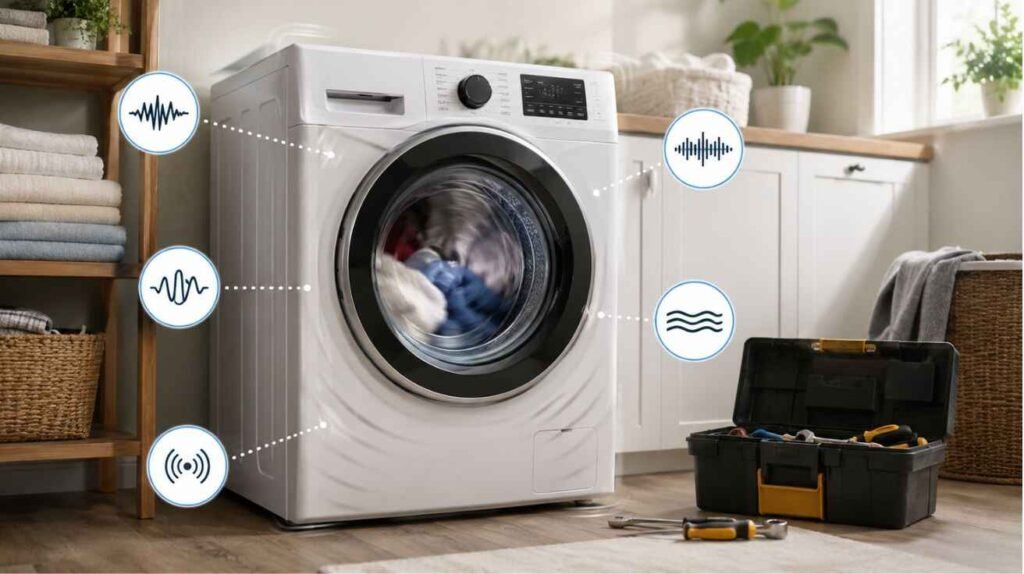
    Modern front-load washer vibrating during spin cycle with sound wave icons and repair toolkit in a bright laundry room.

    1. Banging or Thumping Noise During Spin Cycle

    A loud banging noise during the spin cycle usually happens when the laundry load is unbalanced. Heavy items like towels, bedsheets, jeans, and blankets can collect on one side of the drum and make the washer shake.

    Common causes include:

    • Unbalanced laundry load
    • Overloaded washer drum
    • Washer not level on the floor
    • Weak flooring
    • Worn shock absorbers or suspension rods
    • Shipping bolts still installed in a new washer

    First, pause the washer and spread the clothes evenly inside the drum. If the washer is overloaded, remove some items and restart the cycle. Also check if the washer is level. If the banging continues with normal loads, internal suspension parts may need repair.

    2. Grinding or Scraping Noise

    A grinding or scraping noise should be checked quickly. Sometimes small objects like coins, keys, buttons, hairpins, or bra wires get stuck inside the drum, rubber seal, or drain pump area.

    Possible causes include:

    • Foreign object inside the drum
    • Object stuck in the pump filter
    • Worn drum bearings
    • Damaged pulley
    • Loose internal part

    Turn off the washer and inspect the drum carefully. Check the rubber door seal if you have a front-load washer. If the grinding noise becomes louder during spinning, the drum bearings may be worn. Bearing problems usually need professional repair.

    3. Rattling Noise

    A rattling washer often means something loose is vibrating. The sound may come from inside the washer or from hoses and cords touching the wall.

    Common causes include:

    • Coins or buttons inside the drum
    • Loose drain hose
    • Water hoses hitting the wall
    • Loose screws or panels
    • Washer feet not firmly touching the floor

    Check around the washer first. Make sure the drain hose, water hoses, and power cord are not hitting the wall or cabinet. Then check the drum, pockets, and filter area. Fixing rattling early can prevent more vibration damage.

    4. Humming or Buzzing Noise

    A humming or buzzing noise usually means the washer is trying to work but something is blocking the process. If it happens while filling, there may be a water supply issue. If it happens while draining, the drain pump or filter may be blocked.

    Common causes include:

    • Clogged drain pump filter
    • Blocked drain hose
    • Kinked water hose
    • Faulty drain pump
    • Water inlet issue
    • Electrical fault

    Do not keep running the washer if it hums but does not fill, drain, or spin. Check the water supply, hoses, and filter. If the noise continues, call a technician.

    5. Squealing or High-Pitched Noise

    A squealing washer sound often comes from friction or extra pressure on moving parts. It may happen when the washer is overloaded or when a belt, pulley, or motor part is worn.

    Possible causes include:

    • Overloaded washer
    • Worn belt
    • Motor issue
    • Drive pulley problem
    • Object rubbing inside the drum

    Try reducing the load first. If the squealing sound continues even with a normal load, the washer should be inspected before the problem gets worse.

    6. Roaring or “Airplane” Noise During Spin

    If your washer sounds like an airplane taking off, especially during the spin cycle, it may have worn drum bearings. This sound usually becomes louder as the drum spins faster.

    Warning signs include:

    • Loud roaring during spin
    • Drum feels rough when turned by hand
    • Drum feels loose
    • Noise gets worse over time

    This is not a simple DIY repair. Bearing or tub-related problems should be checked by a professional washer repair technician. If the washer is very old, compare the repair cost with the price of replacement.

    Normal Washer Sounds vs Problem Sounds

    Some washer sounds are normal, such as water filling, soft humming while draining, light clicking, and mild vibration during high-speed spin.

    Problem sounds include:

    • Loud banging every cycle
    • Grinding or scraping
    • Roaring during spin
    • Washer shaking violently
    • Buzzing with no draining
    • Squealing with normal loads
    • Metallic knocking
    • Noise with burning smell

    If the noise is loud, sudden, or getting worse, stop using the washer and inspect it safely.

    Quick Troubleshooting Checklist

    StepWhat to CheckWhat to Do
    1Laundry loadBalance the laundry load evenly inside the drum.
    2OverloadingAvoid overloading the washer drum. Remove extra clothes if needed.
    3Washer levelCheck if the washer is level on the floor.
    4Washer feetMake sure all washer feet touch the floor firmly.
    5Small objectsRemove coins, keys, buttons, and small objects from pockets.
    6Drum and rubber sealCheck the drum and rubber seal for trapped items.
    7Drain pump filterClean the drain pump filter if it is accessible.
    8Hoses touching wallMake sure hoses are not hitting the wall or cabinet.
    9Kinked hosesCheck that water and drain hoses are not bent or kinked.
    10Shipping boltsFor a new washer, confirm that shipping bolts are removed.
    Final CheckBasic troubleshootingThese simple checks can solve many washer noise problems.

    When to Call a Professional

    Call a technician if your washer still makes noise after basic checks or if you notice grinding, roaring, burning smell, water leakage, error codes, violent shaking, or poor draining.

    For reliable washer noise repair, FixMaster Appliances can inspect the problem safely and help prevent further damage.

    How to Prevent Washer Noise Problems

    To reduce washer noise, avoid overloading, balance heavy items, empty pockets before washing, keep the washer level, clean the filter regularly, and use the correct detergent amount. Regular care helps protect the drum, motor, pump, and suspension system.

    FAQs About Washer Noise Problems

    1. Why is my washer loud during the spin cycle?

    A washer is usually loud during spinning because of an unbalanced load, overloading, uneven leveling, worn bearings, or weak suspension parts.

    2. Is grinding noise from a washer serious?

    Yes, grinding noise can be serious. It may be caused by a trapped object, worn bearing, damaged pulley, or internal rubbing. Stop using the washer and inspect it.

    3. Why does my washer sound like an airplane?

    An airplane-like noise during spin often points to worn drum bearings or a failing tub seal. This usually needs professional repair.

    4. Why is my washer shaking and banging?

    A washer shakes and bangs because of uneven clothes, overloading, poor leveling, weak flooring, or worn shock absorbers.

    5. Can a clogged drain pump make noise?

    Yes, a clogged drain pump or filter can cause humming, buzzing, clicking, or grinding noise during draining or spinning.

  • Signs Your Washer Needs Repair – Complete Guide 2026

    Signs Your Washer Needs Repair – Complete Guide 2026

    A washing machine may need repair if it is not spinning properly, making loud noises, leaking water, failing to drain, smelling bad, or stopping in the middle of a cycle. These issues can point to mechanical wear, drainage blockage, electrical faults, or sensor problems. Fixing them early can help prevent bigger repair costs and sudden breakdowns.

    Signs Your Washer Needs Repair

    A washing machine is one of the most important appliances in any home. When it works properly, laundry feels easy and routine. But when small problems begin to appear, they can quickly disturb your daily schedule.

    Issues such as unusual noise, slow drainage, water leakage, or clothes coming out too wet should not be ignored. These are often early warning signs that your washer needs attention. In this guide, you will learn the main symptoms of washer problems, possible causes, basic DIY checks, and when it is better to call a professional technician.

    Modern washing machine leaking water in a laundry room with repair tools nearby.

    Why Early Washer Repair Matters

    Ignoring small washer issues can lead to serious damage over time. A simple blocked filter, loose hose, or worn belt may later turn into a bigger mechanical or electrical problem.

    Identifying problems early can help you:

    • Save money on major repairs
    • Improve washing performance
    • Extend the life of your appliance
    • Prevent water damage in your home
    • Avoid sudden machine failure

    Regular checking and basic maintenance can keep your washing machine running smoothly for a longer time.

    Top Signs Your Washer Needs Repair

    Below are the most common washer problems homeowners should watch for.

    1. Washer Not Spinning Properly

    If your clothes are still very wet after the wash cycle, the washer may not be spinning correctly. This problem affects both washing and drying performance.

    Possible causes include:

    • Worn drive belt
    • Faulty motor
    • Broken lid switch
    • Overloaded drum
    • Load imbalance

    You can first try reducing the laundry load and restarting the cycle. If the problem continues, the machine may need professional inspection.

    2. Loud Noise During Operation

    A washing machine should make some sound while running, but loud banging, grinding, or shaking noises are not normal. These sounds usually mean that something inside the washer is loose, damaged, or unbalanced.

    Common reasons include:

    • Damaged drum bearings
    • Loose internal parts
    • Foreign objects stuck inside the drum
    • Uneven floor level
    • Worn suspension rods or shock absorbers

    If the sound becomes louder with every cycle, stop using the washer and get it checked before the damage spreads.

    3. Water Leaking From the Washer

    Water leakage is one of the most serious washer problems because it can damage floors, walls, and nearby electrical parts. Even a small leak should be fixed quickly.

    Possible causes include:

    • Cracked inlet hose
    • Damaged door seal
    • Loose drain connection
    • Faulty water pump
    • Overfilled detergent drawer

    Check the hoses and rubber seal first. If the leak is coming from underneath the machine, it may need a technician.

    4. Washer Not Draining Water

    If water stays inside the drum after the cycle ends, your washer has a drainage issue. This can leave clothes wet, smelly, and poorly washed.

    Common causes include:

    • Clogged drain hose
    • Blocked filter
    • Faulty drain pump
    • Kinked pipe
    • Small items stuck in the drainage system

    Cleaning the drain filter may solve the issue. However, if the washer still does not drain, the pump or internal drainage system may be faulty.

    5. Bad Smell Coming From the Machine

    A bad smell from the washer is usually caused by moisture, detergent buildup, mold, or standing water. This problem is common in front-load washing machines and humid environments.

    Possible reasons include:

    • Mold around the rubber gasket
    • Detergent residue inside the drum
    • Dirty drain filter
    • Standing water after wash cycles
    • Keeping the door closed for too long

    To reduce odor, clean the drum, wipe the door seal, and leave the washer door open after use so the inside can dry.

    6. Washer Stops Mid-Cycle

    A washer that stops suddenly during a cycle may have an electrical, sensor, or motor-related issue. This can happen because the machine is overheating, losing power, or detecting an internal fault.

    Possible causes include:

    • Faulty control board
    • Overheating motor
    • Power supply issue
    • Door lock problem
    • Sensor malfunction

    Try resetting the machine once. If the problem happens again, avoid repeated use and call a repair expert.

    Hidden Technical Problems in Washing Machines

    Not every washer problem is visible from the outside. Some faults happen inside the machine and only show through error codes, poor performance, or repeated cycle failure.

    Electrical Issues

    Electrical faults can affect the washer’s performance and safety. These may include:

    • Damaged wiring
    • Faulty PCB or control board
    • Power fluctuation damage
    • Loose internal connections

    If you notice burning smell, sparks, or repeated power failure, stop using the washer immediately.

    Sensor Problems

    Modern automatic washers depend on sensors to manage water level, load balance, cycle timing, and drum movement.

    Common sensor-related issues include:

    • Water level sensor failure
    • Load imbalance detection error
    • Door lock sensor fault
    • Temperature sensor problem
    • Cycle timing error

    Sensor faults usually require professional diagnosis because they are linked with the washer’s electronic system.

    DIY Checks Before Calling a Technician

    Before spending money on repair, you can try a few simple checks at home.

    • Make sure the power plug is properly connected
    • Check if the washer is overloaded
    • Clean the drain filter
    • Inspect the water inlet hose
    • Remove visible blockages
    • Make sure the washer is placed on a level surface
    • Restart or reset the machine
    • Use the correct amount of detergent

    These steps can solve minor issues. However, if the same problem returns, it may be a sign of a deeper fault.

    When You Should Call a Professional

    Call a professional technician if your washer has a burning smell, continuous water leakage, electrical sparks, repeated error codes, loud grinding noise, or the drum stops rotating. These problems can be unsafe and may cause further damage if ignored. For reliable washer repair, you can contact FixMaster Appliances, where trained technicians can inspect and fix the issue safely.

    How to Prevent Washer Problems

    Good maintenance can reduce repair issues and improve the life of your washing machine.

    Follow these tips:

    • Do not overload the drum
    • Use the recommended detergent
    • Clean the drum regularly
    • Wipe the rubber seal after washing
    • Keep the door open after use
    • Check hoses every month
    • Clean the drain filter when needed
    • Run a maintenance cycle regularly
    • Keep the machine on a balanced surface

    Small maintenance habits can prevent many common washer problems.

    FAQs

    1. What are the early signs of washing machine failure?

    Early signs include loud noise, slow spinning, water leakage, poor drainage, bad smell, and the washer stopping during a cycle.

    2. Why is my washer shaking violently?

    A washer may shake violently because of an unbalanced load, uneven flooring, worn suspension parts, or overloading.

    3. Can I still use a leaking washing machine?

    It is not recommended to use a leaking washer because water can damage electrical parts, flooring, and nearby appliances.

    4. Why does my washer smell bad even after cleaning?

    Bad smell may continue if mold, detergent residue, or standing water is trapped inside the rubber seal, drain filter, or drum.

    5. How long does a washing machine usually last?

    Most washing machines last around 8 to 12 years, depending on usage, maintenance, brand quality, and repair history.