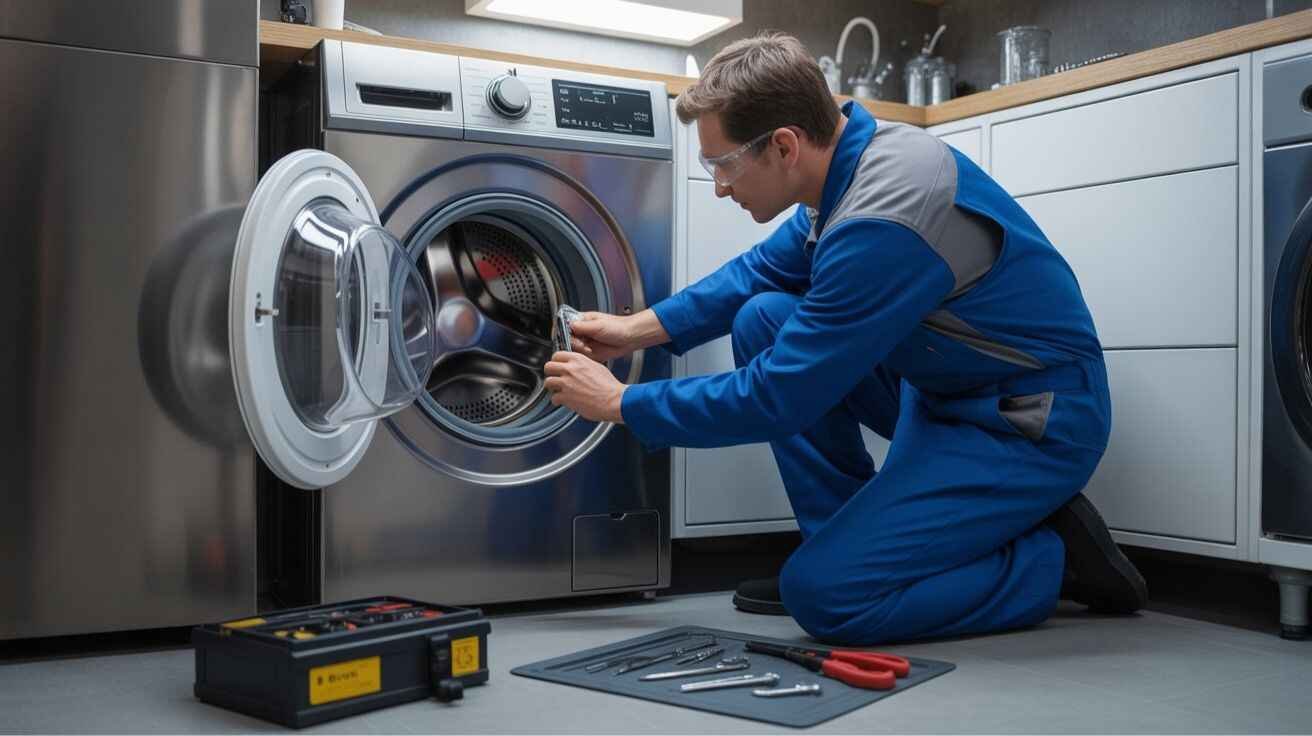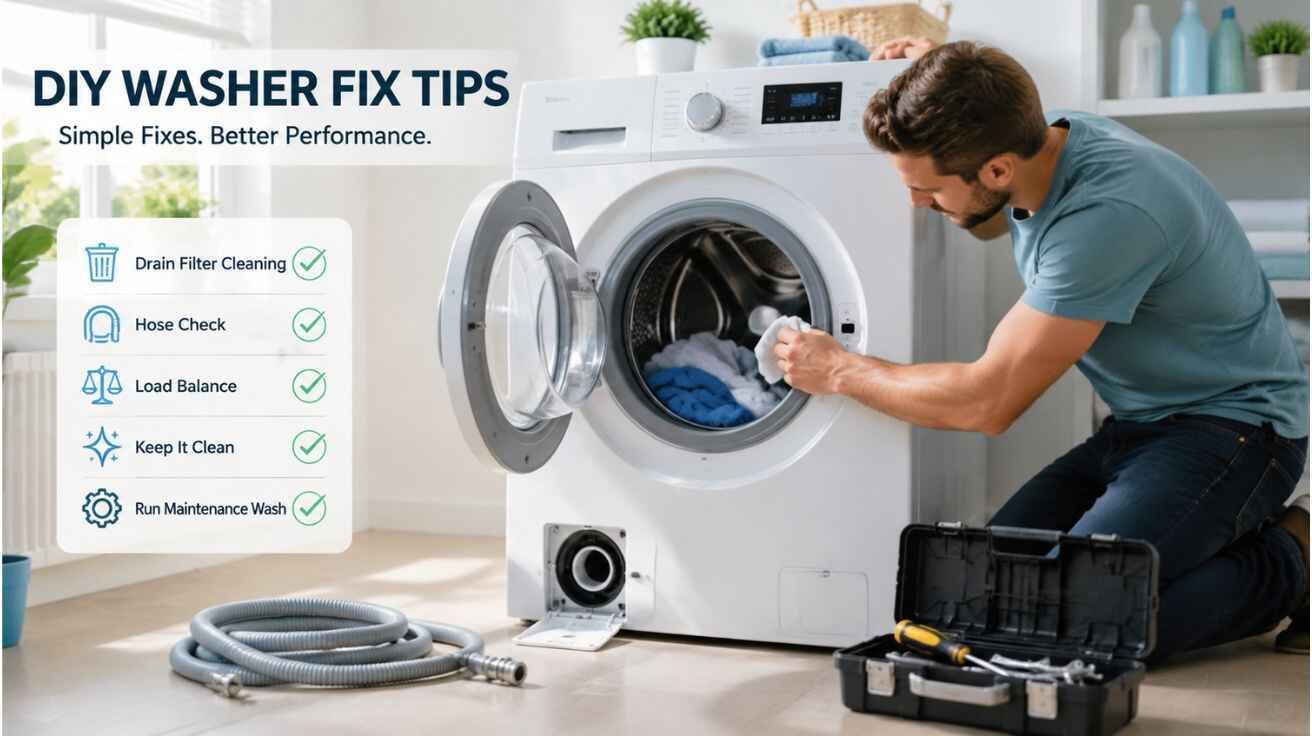
The best DIY washer fix tips are to check power first, reset the washer, balance the load, inspect the drain hose, clean the drain pump filter, check the water supply, wipe the door seal, use less detergent, and make sure the washer is level. These simple checks can solve many common washing machine problems without replacing parts.
Why DIY Washer Fix Tips Matter
A washing machine is one of the most important home appliances, and when it stops working, daily life is affected immediately. Most washer problems are not major mechanical failures, they are simple issues like clogged filters, wrong load balance, hose blockage, or excess detergent.
This guide provides practical DIY washer fix tips based on real-world appliance troubleshooting patterns used by technicians and common user problems.
Quick Troubleshooting Table
| Problem | DIY Fix |
|---|---|
| Not starting | Reset power and door lock |
| Not draining | Clean filter and hose |
| Not spinning | Balance load and remove excess clothes |
| Leaking | Tighten hoses and clean gasket |
| Vibrating | Level washer and balance load |
| Smell | Clean seal and detergent drawer |
Safety First Before Any Washer Repair
Before attempting any washing machine troubleshooting:
- Always unplug the washer from the power supply
- Turn off water valves before checking hoses
- Avoid opening motor, wiring, or control panels
- Keep water-absorbing cloths nearby for leaks
- Follow manufacturer instructions for your model
DIY repair is only safe for external and basic maintenance issue not internal electrical or mechanical repairs.
1. Washer Not Starting
Common Causes:
- No power supply or tripped breaker
- Door/lid not properly closed
- Child lock activated
- Faulty start button or reset required
DIY Fix:
Check the plug and wall socket first. Reset the circuit breaker if needed. Close the door firmly until it clicks. Turn off child lock mode if active. Finally, unplug the washer for 2–3 minutes and restart it.
If the machine still does not respond, the issue may involve the control board or door switch.
2. Washer Not Draining Water
Common Causes:
- Clogged drain filter
- Kinked drain hose
- Pump blockage
- Excess detergent suds
- Blocked household drain
DIY Fix:
Locate the drain filter (usually at the bottom front). Open it carefully and remove lint, coins, or debris. Check the drain hose for bends or blockage. Straighten it and ensure proper water flow.
Run a “Drain & Spin” cycle after cleaning.
If the washer hums but water doesn’t drain, the pump may be partially blocked.
3. Washer Not Spinning Properly
Common Causes:
- Unbalanced load
- Overloaded drum
- Drain issue
- Faulty lid/door switch
DIY Fix:
Redistribute clothes evenly inside the drum. Remove heavy single items like blankets. Make sure the washer is not overloaded.
Check if water is still inside washers will not spin if drainage is incomplete. Level the machine using adjustable feet.
4. Washing Machine Leaking Water
Common Causes:
- Loose inlet or drain hoses
- Damaged door gasket (front load)
- Too much detergent
- Cracked detergent tray
DIY Fix:
Inspect all hose connections and tighten them. Clean the rubber door seal where dirt and lint collect. Reduce detergent quantity, especially for HE washers.
If leakage continues from underneath, internal pump or seal issues may be present.
5. Washer Making Loud Noise or Vibrating
Common Causes:
- Unbalanced load
- Washer not level
- Foreign objects in drum
- Worn suspension parts
DIY Fix:
Pause the cycle and redistribute clothes. Check for coins, pins, or small items inside the drum. Adjust washer feet to ensure stability.
For new washers, ensure shipping bolts are removed.
6. Washer Smells Bad
Common Causes:
- Mold in door gasket
- Detergent buildup
- Wet clothes left inside
- Poor ventilation
DIY Fix:
Wipe the rubber seal regularly. Leave the door slightly open after use. Clean the detergent drawer monthly. Run a hot water cleaning cycle once every 3–4 weeks.
Avoid excess detergent to prevent residue buildup.
7. Washer Not Filling With Water
Common Causes:
- Closed water valve
- Blocked inlet filter
- Kinked hose
- Low water pressure
DIY Fix:
Ensure both hot and cold water valves are open. Check hose connections. Clean inlet mesh filters if clogged with sediment.
If water still does not enter, the inlet valve may be faulty.
8. Washer Door Not Opening
Common Causes:
- Water still inside drum
- Cycle not completed
- Door lock delay
DIY Fix:
Wait a few minutes after cycle completion. Run drain cycle if water remains inside. Restart washer to reset system.
Never force open the door, as it may damage the lock mechanism.
Maintenance Tips for Long Washer Life
- Use correct detergent amount
- Clean drain filter every 1–2 months
- Keep door open after wash
- Avoid overloading drum
- Inspect hoses regularly
- Run monthly cleaning cycle
Proper maintenance prevents 70% of common washer problems.
When to Call a Technician
DIY fixes work for basic washing machine issues, but professional help is necessary when the problem goes beyond simple maintenance or safety becomes a concern.
Call a qualified technician if you notice:
- Burning smell, electrical issues, or signs of overheating
- Washer does not power on at all despite proper power supply
- Drum or motor is not moving during any cycle
- Internal leaks appearing from underneath the machine
- Repeated error codes that do not clear after reset
For reliable inspection and repair services, you can contact FixMaster Appliances for professional washing machine diagnostics and repair support.
FAQs
1. Why is my washing machine not draining even after cleaning?
If cleaning the filter doesn’t help, the drain hose or pump may be blocked. In some cases, the household drain system is clogged, not the washer itself.
2. Can too much detergent stop washing machine spinning?
Yes. Excess detergent creates foam buildup, causing cycle delays or spin failure in modern washers.
3. Why is my washer shaking violently?
Unbalanced load, uneven flooring, or overloaded drum are the main causes. Redistribute clothes and level the machine.
4. How do I unlock a stuck washer door?
Wait for cycle completion, run drain cycle if water remains, and restart washer. Do not force the door.
5. Is DIY washer repair safe?
Yes for basic issues like cleaning, leveling, and hose checks. Electrical or internal repairs should be left to professionals.
Conclusion
Most washing machine problems can be solved with simple DIY washer fix tips like cleaning filters, balancing loads, checking hoses, and proper maintenance. These small steps save money, extend machine life, and prevent unnecessary repairs.