Fix Master Appliances

Tag: washing machine not draining

  • Why Washing Machines Stop Draining | Complete Fix Guide

    Why Washing Machines Stop Draining | Complete Fix Guide

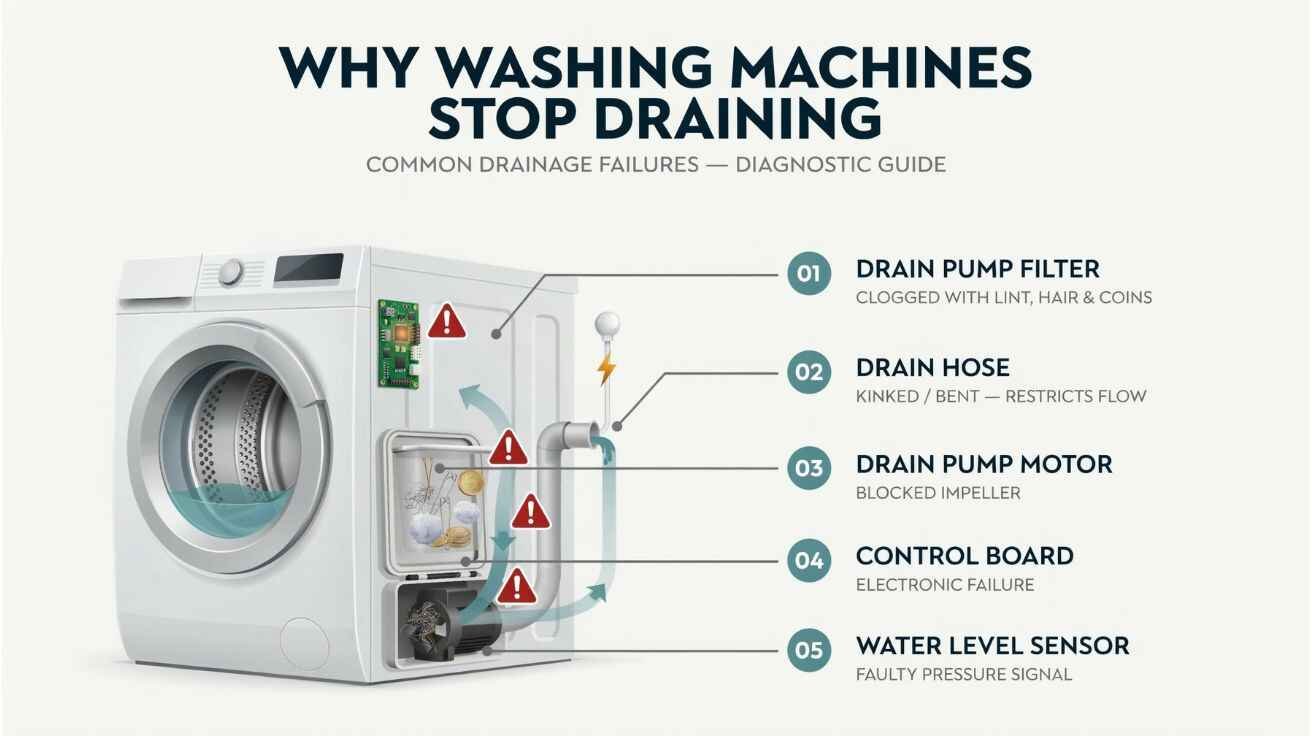
    Washing machines stop draining mainly due to a blocked drain pump filter, clogged or kinked drain hose, faulty drain pump motor, or foreign objects stuck in the drainage system. In some cases, electrical issues like a faulty lid switch, pressure sensor failure, or control board malfunction can also stop the draining process. Most of the time, the issue is caused by simple blockages that can be fixed by cleaning the filter or hose.

    Understanding the Drainage System in Washing Machines

    To fully understand Why Washing Machines Stop Draining you must first understand how the drainage system works. Every washing machine uses a combination of a drain pump, hose, filter, and control system to remove dirty water after the wash cycle.

    When the cycle ends, the pump activates and pushes water through the filter and drain hose into your home drainage pipe. If any part of this system becomes blocked, damaged, or electronically interrupted, the machine fails to drain water properly.

    This is why users often find water stuck inside the drum even after the cycle is complete.

    Major Reasons Why Washing Machines Stop Draining

    1. Clogged Drain Pump Filter (Most Common Issue)

    The drain filter collects lint, hair, detergent residue, and small objects like coins or buttons. Over time, this buildup blocks water flow completely.

    Many users ignore filter cleaning, which leads to slow drainage or total blockage.

    2. Blocked or Kinked Drain Hose

    A drain hose can easily bend or get crushed behind the machine. Even a small kink can stop water flow completely.

    This is one of the simplest but most overlooked causes of drainage failure.

    3. Faulty Drain Pump Motor

    The drain pump is responsible for pushing water out. If the motor burns out or weakens, you may hear humming sounds but no water movement.

    This usually requires replacement.

    4. Foreign Objects Inside the System

    Small items like:

    • Socks
    • Coins
    • Hairpins
    • Tissue paper

    can enter the drainage system and block the pump or hose, stopping water flow.

    5. Excess Detergent & Lint Buildup

    Using too much detergent creates sticky residue inside pipes and filters. Over time, this buildup restricts water flow and slows down drainage performance.
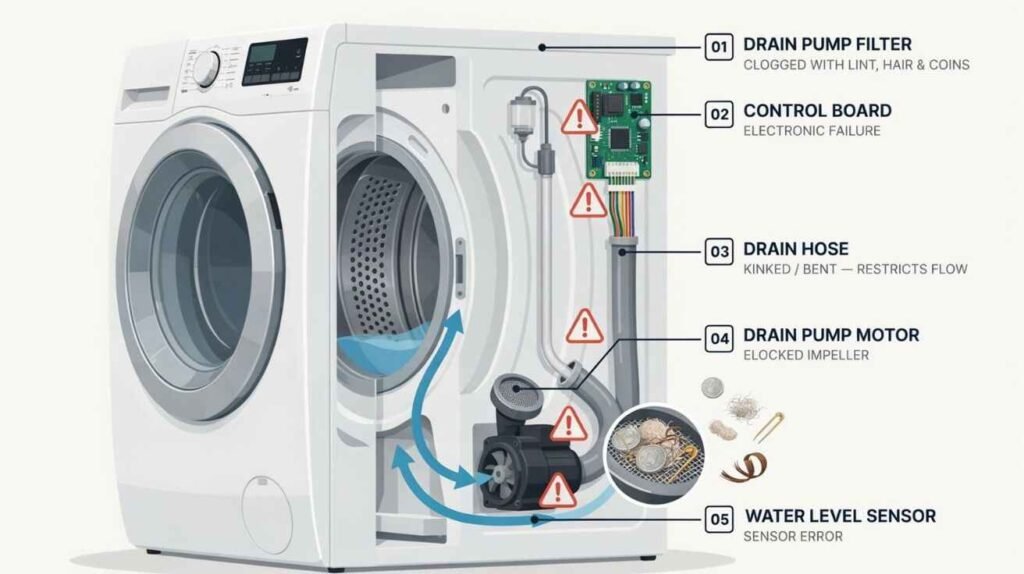
    Cross-section diagram of a washing machine explaining common drainage failures including blocked filter, pump obstruction, control board error, and sensor malfunction with arrows showing water flow.

    Electrical & Sensor Issues Behind Drain Failure

    Sometimes the problem is not mechanical but electronic.

    Lid Switch Failure (Top Load Machines)

    If the lid switch is faulty, the machine assumes the lid is open and stops the drain cycle for safety reasons.

    Control Board Malfunction (PCB Issue)

    Modern washing machines rely on electronic control boards. If the PCB fails or glitches, it may stop sending signals to the drain pump.

    Water Level / Pressure Sensor Failure

    If the sensor cannot detect correct water levels, the machine may incorrectly stop the draining process.

    Step-by-Step Diagnosis Used by Technicians

    Professional technicians follow this method:

    1. Check power supply and cycle selection
    2. Listen for drain pump sound
    3. Inspect drain hose for blockage or bending
    4. Clean drain filter thoroughly
    5. Test drain/spin cycle
    6. Inspect internal pump and wiring

    This process identifies most issues within minutes.

    DIY Fixes You Can Try at Home

    Clean Drain Pump Filter Properly

    StepAction
    1Turn off power & unplug machine
    2Open bottom filter cover
    3Remove debris from filter
    4Rinse filter with water
    5Reinstall tightly

    Check Drain Hose Flow

    Detach hose and run water through it. If water flows slowly or not at all, there is a blockage.

    Reset the Washing Machine

    Unplug the machine for 5–10 minutes. This resets minor electronic glitches in the control system.

    Run Empty Hot Water Cycle

    This helps remove detergent buildup and internal residue inside pipes.

    Advanced Technical Issues (Hidden Problems)

    Some drainage failures are deeper:

    • Pump impeller broken internally
    • Damaged wiring harness
    • Faulty capacitor in motor
    • Pressure switch calibration failure
    • PCB relay burnout

    These require professional repair tools.

    When You Should Call a Technician

    Call a repair expert if:

    • Water stays even after cleaning the filter
    • Pump makes no sound at all
    • Burning smell is present
    • Error codes appear repeatedly
    • Machine stops mid-cycle frequently

    Ignoring these signs may cause expensive damage. In such cases, it is recommended to contact a professional service like FixMasterAppliances for accurate diagnosis and reliable repair, ensuring your washing machine is fixed safely and efficiently.

    Preventive Maintenance Tips

    To avoid drainage problems:

    • Clean filter every 2–4 weeks
    • Do not overload washing machine
    • Use correct detergent quantity
    • Check pockets before washing clothes
    • Keep hose straight and unbent
    • Run maintenance wash monthly

    FAQs

    1. Why is my washing machine not draining water but everything else is working?

    This usually happens when the drain pump filter or hose is blocked. The machine may still spin and wash normally, but water cannot exit due to obstruction in the drainage system. In some cases, the drain pump motor may also be weak, preventing proper water discharge.

    2. How do I fix a washing machine that won’t drain completely?

    Start by cleaning the drain pump filter, checking the hose for bends or clogs, and resetting the machine. If the issue continues, run a drain/spin cycle. Persistent problems may require pump inspection or replacement.

    3. What is the most common reason a washing machine stops draining?

    The most common reason is a clogged drain pump filter. Lint, hair, detergent residue, and small objects often block water flow, making it impossible for the pump to drain water efficiently.

    4. Can overloading a washing machine cause drainage problems?

    Yes, overloading puts extra pressure on the motor and restricts water circulation. This can lead to poor drainage, unbalanced cycles, and strain on the pump system.

    5. Why does my washing machine make noise but not drain water?

    If you hear noise but no drainage, the pump motor is likely working but something is blocking water flow. This is usually caused by a clogged filter, jammed impeller, or blocked hose.

    6. How often should I clean the washing machine drain filter?

    For best performance, the drain filter should be cleaned every 2–4 weeks. If you wash heavy clothes or use the machine frequently, cleaning it weekly is recommended.

    7. Why does my washing machine stop mid-cycle with water inside?

    This is often due to a sensor or pump issue. The machine may detect an error in water level or drainage and stop automatically to prevent damage.

    8. Can detergent really cause drainage problems?

    Yes, excessive detergent creates foam and sticky residue inside pipes. Over time, this buildup blocks water flow and reduces drainage efficiency.
  • Common Washing Machine Problems in Dubai : Expert Fix Guide 2026

    Common Washing Machine Problems in Dubai : Expert Fix Guide 2026

    Washing machines in Dubai often develop issues due to hard water, high temperatures, and dust exposure. Common problems include the machine not starting because of power or door lock faults, not spinning due to overloading or motor issues, or pump failure, leakage from damaged pipes or seals, and excessive noise caused by imbalance or uneven placement. Regular maintenance and proper usage can help prevent most of these problems.

    Common Washing Machine Problems in Dubai

    Washing machines in Dubai often face more stress than in other regions. The combination of extreme heat, hard water, and fine dust particles creates conditions that gradually affect performance. Many homeowners notice recurring issues even with relatively new machines. Understanding the root causes helps you respond early and avoid costly breakdowns.

    This guide explains the most common washing machine problems in Dubai, along with practical insights from real repair experience.

    Why Washing Machines Fail More in Dubai?

    Dubai’s environment plays a significant role in appliance wear and tear. One of the biggest factors is hard water, which contains minerals that build up inside pipes, drums, and heating elements. Over time, this reduces efficiency and strains internal components.

    Another issue is high temperature exposure. Machines placed in balconies or non-air-conditioned areas are more likely to overheat, especially during long cycles. This can impact motors and electronic boards.

    Additionally, dust and sand particles can enter filters and drainage systems. Even small particles can block internal pathways, leading to performance issues. These environmental factors make regular maintenance essential rather than optional.

    Common Causes of Washing Machine

    Washing Machine Not Starting

    A washing machine that does not start is one of the most frustrating problems. In many cases, the issue is not as serious as it seems.

    The first thing to check is the power supply. Loose plugs, faulty sockets, or minor voltage fluctuations can interrupt the machine’s operation. Another common cause is the door lock system. Most modern machines are designed not to start unless the door is securely closed and locked.

    If both seem fine, the issue could be related to the control board or internal wiring, which requires professional inspection. Ignoring early signs can lead to bigger electrical faults later.

    Machine Not Spinning Properly

    When a washing machine fails to spin properly, clothes remain wet and heavy after the cycle. This issue is often linked to overloading, which puts excessive pressure on the drum and motor.

    Another common cause is a worn-out belt or motor malfunction. Over time, internal components lose efficiency, especially in machines exposed to hard water conditions.

    In Dubai, mineral deposits can also affect drum movement. Regular cleaning cycles help reduce buildup and improve performance. It’s always better to maintain a balanced load instead of forcing extra clothes into one wash.

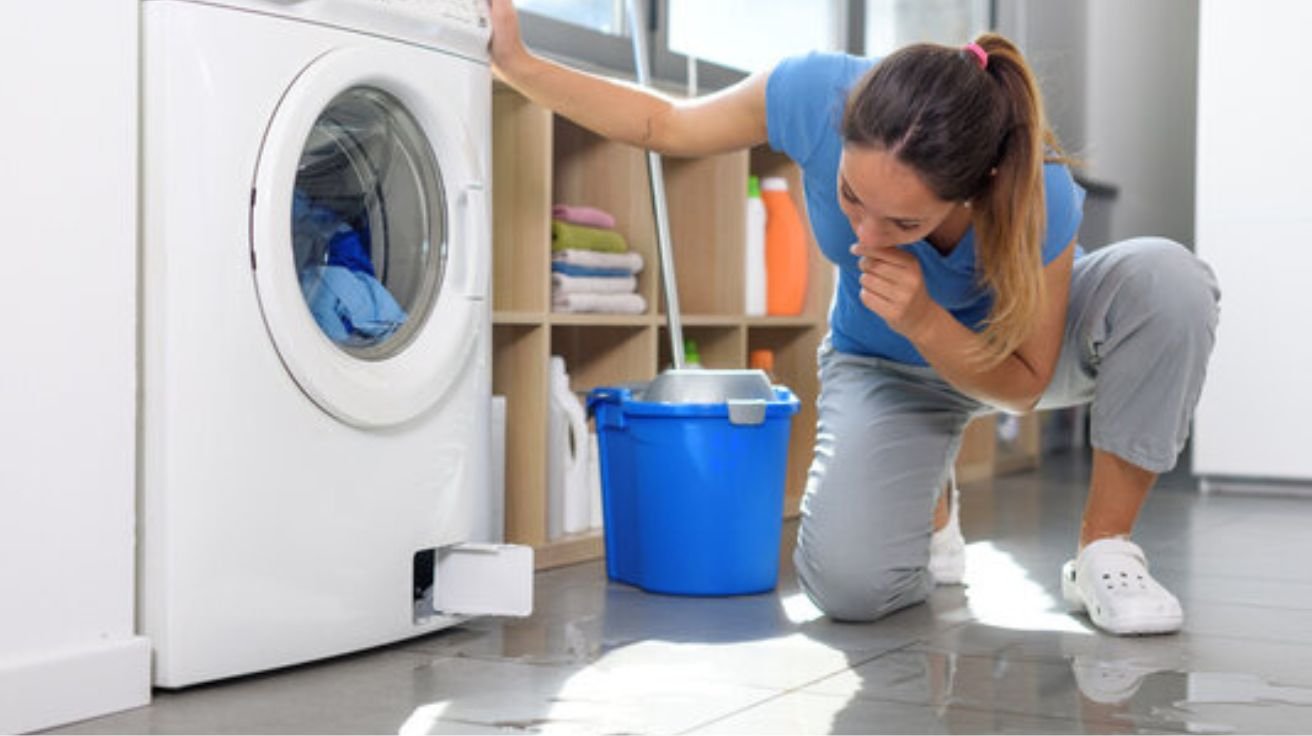
    Water Not Draining

    Drainage issues are very common and usually develop gradually. The most frequent cause is a blocked filter or drain pipe, where lint, dirt, and debris accumulate over time.

    In some cases, the problem lies in the drain pump, which may become weak or fail completely. Signs include water remaining in the drum or the machine stopping mid-cycle.

    Routine cleaning of filters can prevent most drainage problems. However, if the issue continues, it’s best to get it checked before it affects other components.

    Water Leakage Problems

    Water leakage can quickly turn into a serious issue if ignored. It not only affects the machine but can also damage surrounding flooring and cabinets.

    Leaks are usually caused by loose or damaged hoses, worn-out door seals, or internal cracks in pipes. In Dubai’s heat, rubber components tend to degrade faster, increasing the chances of leakage.

    Regular inspection of connections and seals can help detect small issues before they become major problems. Even a minor drip should not be ignored.

    Excessive Noise and Vibration

    Unusual noise or strong vibration is often a sign that something is not balanced correctly. The most common reason is an uneven surface, especially on tiled floors.

    Another possibility is drum imbalance or worn internal bearings. If left unchecked, this can lead to serious mechanical damage over time.

    A properly installed washing machine should operate smoothly with minimal noise. Any sudden change in sound should be taken as an early warning sign.

    How to Prevent Washing Machine Problems in Dubai

    Preventive care can make a significant difference in how long your machine lasts. Simple habits can reduce the chances of frequent repairs.

    Use anti-scale products to minimize hard water damage. Clean filters regularly to avoid blockages. Avoid overloading the machine, as it puts unnecessary strain on internal parts.

    Keeping the machine in a clean, dust-free environment also helps. Running a maintenance cycle once a month can improve performance and remove internal buildup.

    These small steps not only improve efficiency but also reduce long-term repair costs.

    When Should You Call a Technician?

    While some issues can be handled at home, others require professional attention. If the machine stops completely, produces a burning smell, or continues leaking despite basic checks, it’s time to call a technician.

    Delaying repairs often makes the problem worse. A minor issue today can turn into a major expense if ignored. Getting timely help ensures your appliance remains safe and functional.

    FAQ Section

    Q1: Why do washing machines face more issues in Dubai?
    Because of hard water, high temperatures, and dust exposure, which affect internal components over time.

    Q2: How often should I clean my washing machine?
    At least once a month to maintain efficiency and prevent buildup.

    Q3: Is it better to repair or replace a washing machine?
    Most minor issues can be repaired, making it more cost-effective than replacement.

    Q4: Can hard water damage the machine permanently?
    Yes, if not managed, it can cause scaling and reduce the lifespan of internal parts.