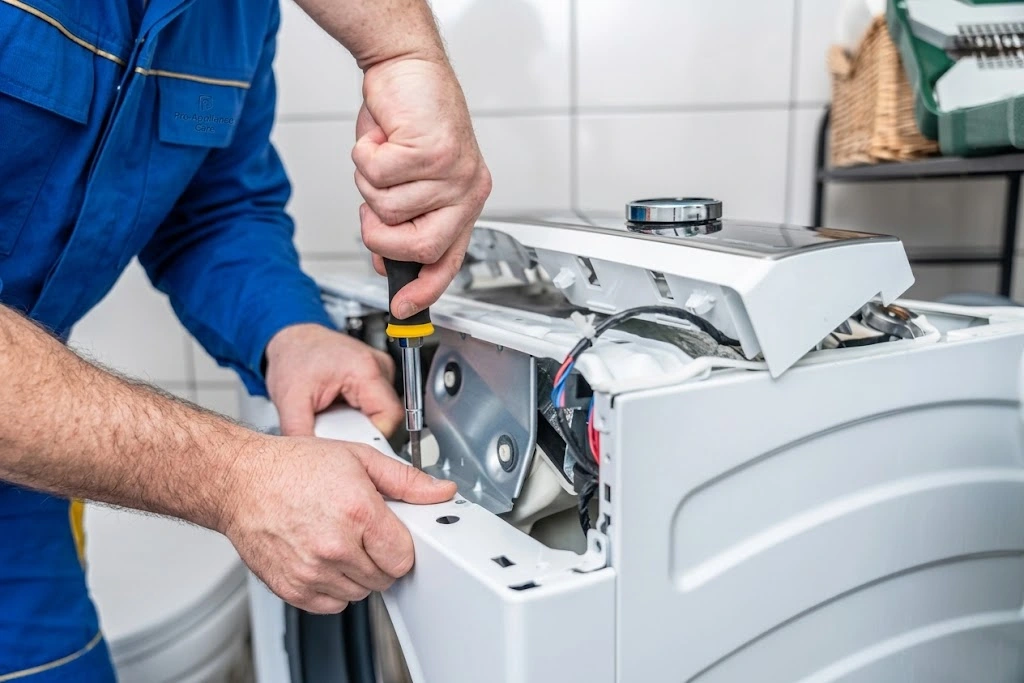
A washing machine can go from working normally to becoming a major household problem in just one cycle. One day it is washing clothes normally; the next, it may stop spinning, leave water inside the drum, leak onto the floor, or refuse to start.
For busy Dubai households, families, landlords, and businesses, even a short appliance breakdown can disrupt daily routines. Dubai’s local conditions, including hard water and high temperatures, can also contribute to wear on certain washing machine components.
The good news is that many washing machine repair problems can be diagnosed and repaired without replacing the entire appliance. Understanding the symptoms, possible causes, repair costs, and maintenance requirements can help you make a more informed decision.
This guide explains common washing machine faults, when professional help may be needed, what affects repair costs, and how to decide between repairing and replacing a washing machine.
Common Washing Machine Problems in Dubai
Washing machine faults can involve mechanical, electrical, electronic, water, drainage, or heating components. The same symptom can sometimes have several different causes, which is why replacing a part without proper diagnosis may not solve the problem.
Washing Machine Not Starting
If the washing machine does not start, the cause may be related to:
- Power supply
- Door-lock mechanism
- Wiring
- Control board
- Internal electrical components
First, check whether the appliance is receiving power and whether the door is properly closed. If the machine still does not respond, a washing machine technician in Dubai can inspect the relevant electrical and control components.
Washing Machine Not Spinning
A washing machine not spinning may have a problem with the motor, belt, drum, load balance, control system, or another component.
For example, if the machine fills with water and completes part of the wash cycle but the drum does not spin, the issue may not necessarily be the motor itself.
A proper inspection can help determine whether the problem involves the drive system, motor, control system, or another component.
Washing Machine Not Draining
If water remains inside the drum after a wash cycle, the machine may have a drainage problem.
Possible causes include:
- Blocked drain filter
- Restricted drain hose
- Faulty drain pump
- Foreign object in the drainage system
A blocked drainage system can prevent the machine from completing its cycle and may contribute to leakage if the problem continues.
Washing Machine Leaking Water
A washing machine leaking water can have several possible sources, including:
- Door seal or gasket
- Water inlet hose
- Drain hose
- Pump
- Detergent drawer
- Loose connections
The location of the water can provide an initial clue, but it does not always identify the failed component.
If water is reaching electrical connections, stop using the appliance and arrange a professional inspection.
Washing Machine Making Loud Noises
Unusual sounds may result from an unbalanced load, foreign object, worn bearing, loose component, belt problem, drum issue, or motor-related fault.
The type and timing of the noise can help a technician narrow down the possible cause.
For example, noise only during spinning may point toward a different area of the machine than a continuous humming sound during the wash cycle.
Washing Machine Not Filling With Water
If the machine does not fill correctly, possible causes include:
- Water supply problem
- Inlet hose restriction
- Inlet valve fault
- Blocked filter
- Pressure-related component
- Electronic control issue
Before arranging a repair, check that the water supply is available and the inlet hose is not visibly blocked or kinked.
Washing Machine Stopping Mid-Cycle
A washing machine that stops during a cycle may be experiencing a drainage problem, water supply issue, door-lock fault, sensor problem, overheating, motor fault, or electronic issue.
If the display shows an error code, record it before switching the appliance off. This information can help the technician understand where to begin the diagnosis.
Washing Machine Door Lock Problems
Modern washing machines use door-lock mechanisms to prevent the door from opening during certain parts of a cycle.
A faulty lock, damaged mechanism, wiring issue, or control problem can prevent the machine from starting or completing a cycle.
Avoid forcing the door open, particularly when water remains inside the drum.
Washing Machine Error Codes
Error codes are designed to indicate that the machine has detected a problem.
However, an error code does not always mean that one specific component needs immediate replacement. Related components may need to be tested before the actual fault is confirmed.
If the same error repeatedly appears after following the manufacturer’s basic troubleshooting instructions, professional diagnosis may be appropriate.
Washing Machine Motor Repair in Dubai
The motor plays an important role in drum movement during washing and spinning.
A motor-related problem can cause symptoms such as:
- Drum not turning
- Spinning failure
- Unusual motor noise
- Machine stopping during operation
- Motor overheating
What Is Checked During Motor Diagnosis?
A technician may inspect:
- Motor operation
- Motor connections
- Wiring
- Signs of overheating
- Belt or drive components
- Control components
- Physical damage
This is important because a machine that appears to have a motor problem may actually have a fault elsewhere in the drive or control system.
Washing Machine Motor Repair vs Replacement
Whether a motor should be repaired or replaced depends on the machine, motor type, fault, availability of parts, and overall appliance condition.
The appropriate solution should be determined after diagnosis rather than simply replacing the motor because the machine is not spinning.
For customers specifically searching for washing machine motor repair Dubai, providing the machine’s brand and model can help the technician understand the appliance before the visit.
Washing Machine Electrical and Electronic Repairs
Modern washing machines use electronic systems to control water intake, temperature, timing, spinning, safety locks, and other functions.
Common Electrical Washing Machine Problems
Electrical faults may involve:
- Power connections
- Wiring
- Door-lock circuits
- Internal electrical components
- Control systems
Electrical problems should not be investigated by opening the appliance without appropriate technical knowledge.
Washing Machine Control Board Problems
The control board manages many of the machine’s programmed functions.
A control-board problem can produce different symptoms, including failure to start, unexpected stopping, error codes, or cycle problems.
Because similar symptoms can result from other faults, diagnosis should be completed before replacing an expensive control component.
Washing Machine Sensors and Electronic Components
Sensors help the washing machine monitor different conditions during a cycle.
Depending on the machine, these can include temperature-related sensors and other components used to control the programmed operation.
A sensor fault can sometimes look similar to a control-board or heating problem, making proper testing important.
Washing Machine Thermostat and Heating Problems
Washing machines that use heated wash programs rely on several components to control water temperature.
What Does a Washing Machine Thermostat Do?
The thermostat and related temperature-control components help the machine maintain the required temperature for selected programs.
A problem with this system can affect washing performance or prevent water from reaching the expected temperature.
Washing Machine Not Heating Water
If a selected program requires heated water but the water remains cold, possible causes include:
- Heating element
- Thermostat
- Temperature sensor
- Wiring
- Control board
The actual failed component should be identified before a replacement is recommended.
Washing Machine Overheating or Incorrect Temperature
Incorrect temperature can indicate a problem with the heating or temperature-control system.
A technician may need to inspect the thermostat, heating element, sensors, wiring, and control components.
Thermostat, Heating Element and Sensor Diagnosis
These components work together, which means a fault in one area can sometimes produce symptoms associated with another.
Testing the complete temperature-control system can therefore help avoid unnecessary part replacement.
Washing Machine Types We Service
Different washing machine designs use different components and operating systems. The repair approach can therefore vary by machine type.
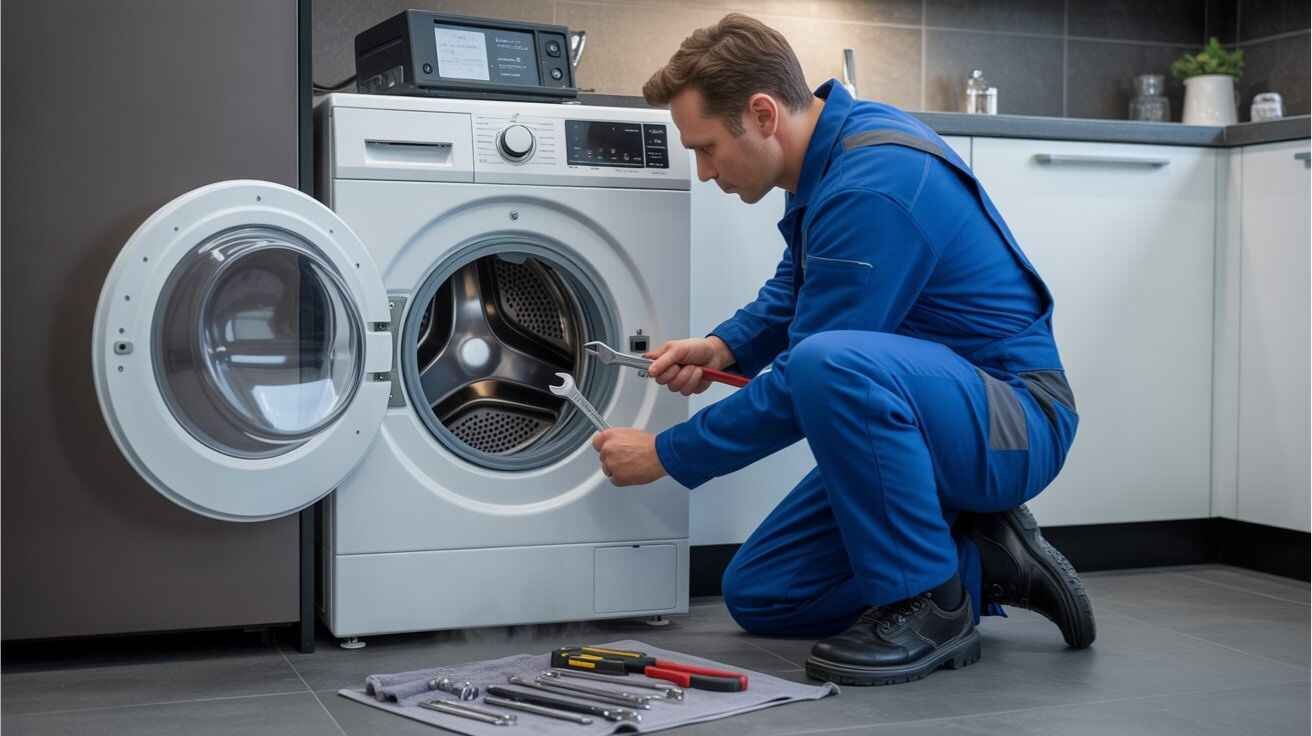
Front Load Washing Machine Repair
Front-load machines can develop problems involving:
- Door locks
- Drainage
- Door seals
- Bearings
- Motors
- Electronics
- Water systems
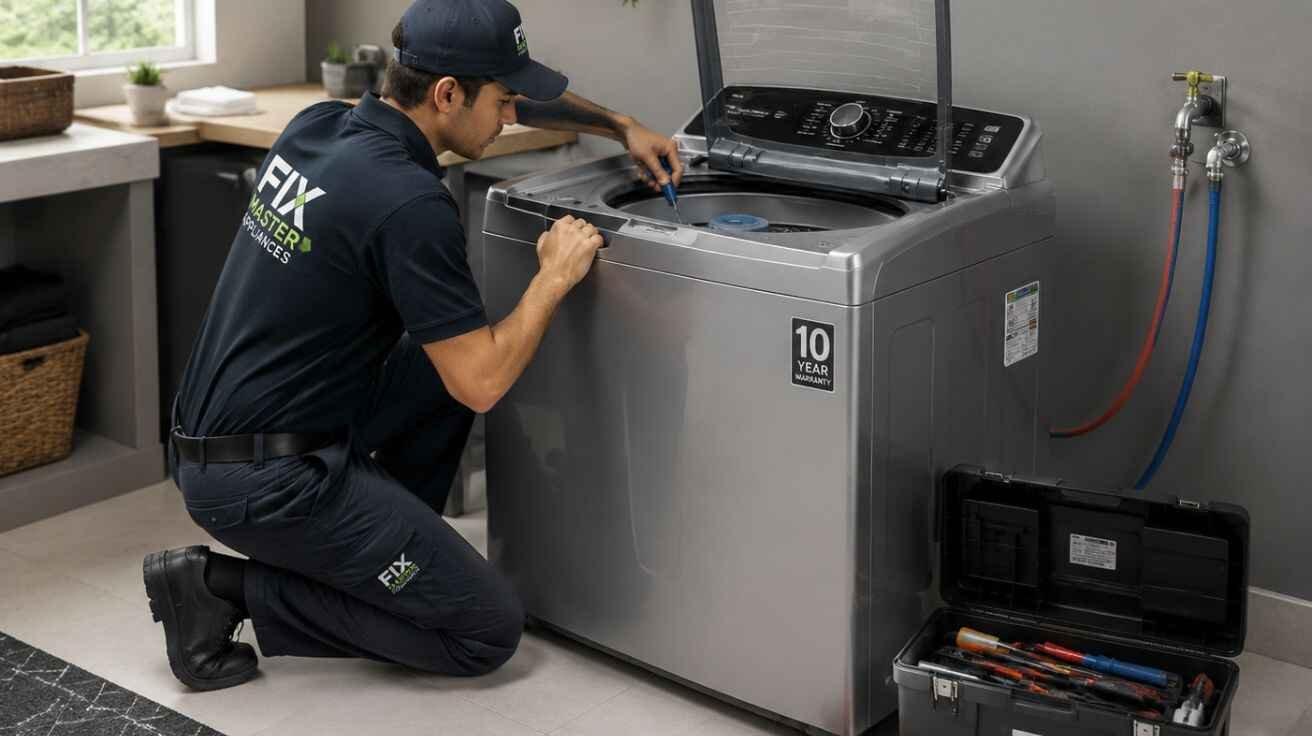
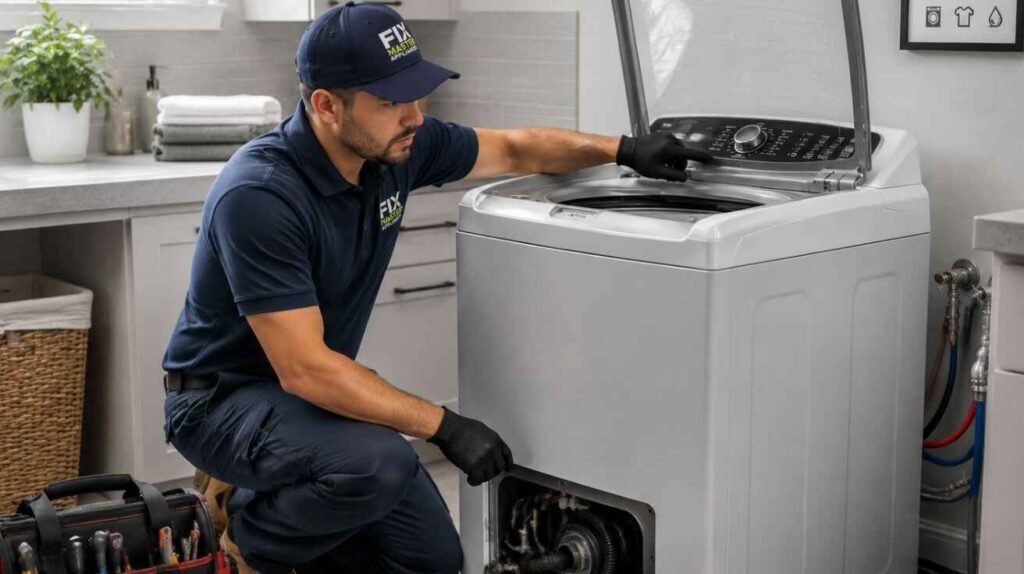
Top Load Washing Machine Repair
Top-load machines have different drum and access arrangements.
Possible repair requirements include:
- Motor problems
- Drainage faults
- Water inlet problems
- Lid-lock issues
- Control faults
- Spinning problems
Fully Automatic Washing Machine Repair
Fully automatic machines manage washing, rinsing, and spinning through programmed cycles.
A technician may need to determine whether the problem occurs during water intake, washing, drainage, spinning, heating, or another stage.
Semi-Automatic Washing Machine Repair
Semi-automatic machines commonly use separate washing and spinning functions.
Repair requirements may involve the motor, timer, drainage system, or control components.
Washer Dryer Repair
A washer dryer combines washing and drying functions in one appliance.
Problems can affect:
- Washing
- Drying
- Heating
- Drainage
- Motor
- Sensors
- Electronics
When requesting washer dryer service, explain whether the issue affects the washing function, drying function, or both.
Washing Machine Brands and Model-Specific Repairs
Washing machines from different manufacturers can use different components and control systems. The exact model is therefore important when assessing a repair.
Bosch Washing Machine Repair
Bosch machines are available in different models and configurations.
When requesting Bosch service, provide the model number and explain the problem, such as drainage, spinning, heating, leakage, or an error code.
Miele Washing Machine Repair
Miele washing machines also vary by model.
Providing the exact model and reported fault can help determine the appropriate repair requirements.
Other Washing Machine Brands
For other brands, service requirements depend on the machine’s model, components, age, and fault.
Providing the brand, model number, and a description of the problem can make the initial service assessment more useful.
Residential Washing Machine Repair in Dubai
A washing machine is often used several times a week in a household, so even a relatively small fault can quickly affect normal routines.
Washing Machine Repair for Apartments
Apartment residents may have limited space around the appliance, making on-site assessment practical where suitable.
Common apartment-related washing machine problems include:
- Leakage
- Drainage
- Spinning
- Door-lock faults
- Water supply problems
Washing Machine Repair for Villas
Washing machines in villas may be installed in kitchens, utility rooms, laundry rooms, or other areas.
Providing the appliance’s exact location inside the property can help with service planning.
Common Home Washing Machine Problems
Residential customers commonly seek assistance for:
- No power
- No spinning
- Poor drainage
- Water leakage
- No water intake
- Unusual noise
- Error codes
- Door-lock problems
Commercial Washing Machine Repair Dubai
Commercial washing machines can be essential for businesses that process laundry regularly.
A fault can interrupt scheduled washing and create additional work for staff.
Where Commercial Washing Machines Are Used
Commercial machines may be found in:
- Laundry businesses
- Hotels
- Accommodation facilities
- Other properties with regular laundry requirements
Common Commercial Washing Machine Faults
Commercial machines can experience:
- Motor problems
- Drainage faults
- Water inlet issues
- Heating problems
- Electrical faults
- Electronic or control problems
Washing Machine Downtime and Business Operations
For a business, a washing machine breakdown can affect daily operations.
Commercial customers should provide information about the machine’s model, operating frequency, location, and reported problem when requesting service.
Repeated Commercial Washing Machine Problems
If the same fault keeps returning, replacing the same component may not solve the underlying problem.
The machine should be assessed for related issues, installation conditions, operating patterns, or another component that may be contributing to the repeated fault.
How Much Does Washing Machine Repair Cost in Dubai?
There is no single repair price that applies to every washing machine.
The final cost depends on the appliance and the fault identified during diagnosis.
Factors That Affect Washing Machine Repair Cost
Important factors include:
- Washing machine brand
- Model
- Machine type
- Nature of the fault
- Required replacement part
- Labour
- Complexity of the repair
Washing Machine Motor Repair Cost
Motor-related costs can vary depending on the motor type, machine model, nature of the fault, and whether repair or replacement is appropriate.
A technician should diagnose the issue before a final motor repair cost is confirmed.
Why You Need Diagnosis Before a Final Repair Price
A washing machine that is not spinning, for example, could have a motor, belt, control, load-balance, or drum-related problem.
Quoting a repair based only on the symptom can therefore be misleading.
A proper diagnosis helps identify what actually needs attention.
When Should You Call a Washing Machine Technician?
Some washing machine problems can be checked through basic manufacturer-recommended troubleshooting. Others require professional inspection.
Signs You Should Request Professional Repair
Consider contacting a technician when:
- The machine will not start
- Water remains inside the drum
- The machine repeatedly leaks
- It produces unusual mechanical noise
- It repeatedly stops during cycles
- Error codes continue to appear
- The drum does not spin
- There is a burning smell
- You notice smoke or sparks
When DIY Troubleshooting May Not Be Appropriate
Avoid opening the machine or attempting internal repairs if the problem involves:
- Electrical components
- Burning smells
- Smoke
- Sparks
- Internal wiring
- Persistent water leakage
Safety should come before attempting to save the cost of a service visit.
Emergency Washing Machine Repair in Dubai
Not every washing machine fault is an emergency, but water and electrical problems can require prompt attention.
What to Do If Your Washing Machine Is Leaking
If the machine is leaking:
- Stop the wash cycle.
- Switch off the appliance safely.
- Disconnect power only if it is safe to do so.
- Close the relevant water supply if appropriate.
- Keep away from wet electrical connections.
- Arrange professional inspection if the problem continues.
What to Do If You Smell Burning or See Sparks
Stop using the washing machine immediately.
Do not open the appliance or attempt to repair internal electrical components yourself.
If there is smoke or visible sparking, keep away from the appliance and seek appropriate professional assistance.
Same-Day Washing Machine Repair
Customers searching for same-day service should provide their Dubai location, washing machine model, and problem when contacting a repair company.
Same-day availability depends on technician schedules, location, and the type of repair required.
How to Book Washing Machine Repair in Dubai
Booking a repair becomes easier when you provide the technician with useful information before the visit.
Contact a Washing Machine Repair Service
Contact a local appliance repair provider and explain the problem clearly.
If you are searching for washing machine repair near me, confirm that the provider covers your Dubai location.
Provide Your Washing Machine Details
Share:
- Brand
- Model number
- Main problem
- Error code, if displayed
- Dubai location
- Preferred service time
A photo of the control panel or error code can also help explain the issue.
Technician Diagnosis
The technician can inspect the appliance and identify the components relevant to the reported fault.
Depending on the problem, this may involve the motor, drainage system, water supply, electrical components, heating system, sensors, or controls.
Repair Approval
Before repair work begins, the customer should understand the identified problem, recommended repair, and applicable charges.
This reduces the risk of unexpected repair costs.
Repair and Testing
After approval, the repair can be completed according to the identified fault.
The machine should then be tested to check whether the relevant function is operating as expected.
Washing Machine Replacement Parts and Component Repairs
Not every washing machine fault requires replacement of the entire appliance.
Individual components can sometimes be repaired, cleaned, adjusted, or replaced depending on their condition.
Drain Pump Repair or Replacement
A faulty or blocked drain pump can prevent water from leaving the drum.
The drainage system should be inspected before deciding whether cleaning, repair, or replacement is required.
Door Lock Repair
A faulty door lock can prevent the machine from starting or completing its cycle.
The lock, wiring, and associated controls may need inspection.
Washing Machine Belt Repair
On belt-driven machines, a damaged or worn belt can affect drum movement.
Symptoms may include failure to spin or unusual drum movement.
Drum and Bearing Issues
Drum or bearing problems can produce excessive noise, vibration, or unusual movement.
The repair requirement depends on the machine’s design and the condition of the affected components.
Water Inlet Valve Repair
The inlet valve controls water entering the machine.
A problem with the valve or associated water-entry system can affect filling and wash-cycle operation.
Control Board Repair
The control board manages electronic functions within the appliance.
Because control faults can produce different symptoms, diagnosis should be completed before considering replacement.
Seal and Gasket Replacement
A damaged seal or gasket can contribute to water leakage.
The correct replacement part depends on the machine’s brand and model.
Washing Machine Repair Parts
Replacement parts should match the washing machine’s exact model and component configuration.
Providing the model number can help identify the correct part requirement.
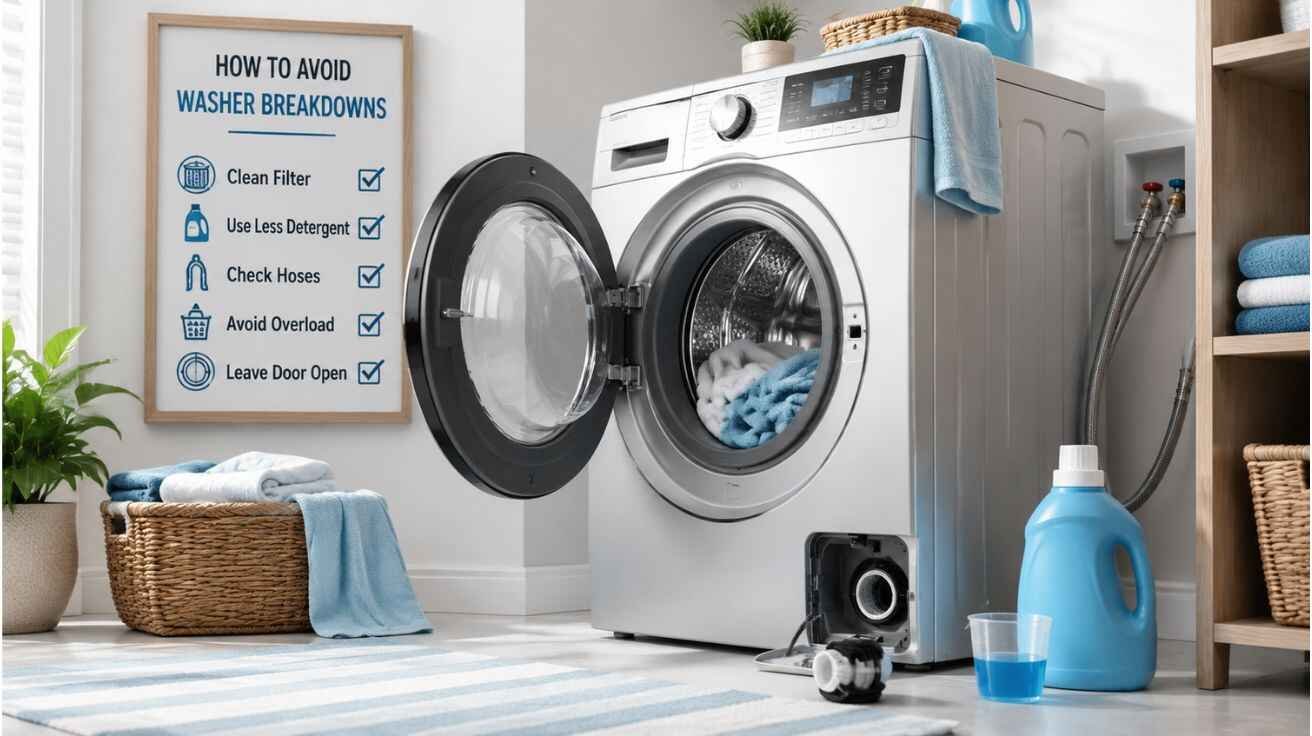
How to Maintain Your Washing Machine
Regular maintenance cannot prevent every breakdown, but it can help reduce avoidable problems.
Clean the Washing Machine Regularly
Clean the detergent drawer, door seal, and other relevant areas according to the manufacturer’s instructions.
Avoid Overloading the Drum
Overloading can place additional stress on the drum, motor, suspension, and other components.
Follow the load capacity specified for your machine.
Check the Drain Filter
A blocked filter can affect drainage.
Check and clean it according to the manufacturer’s instructions.
Inspect Water Hoses
Look for:
- Cracks
- Loose connections
- Visible leakage
- Signs of deterioration
A damaged hose should be addressed rather than ignored.
Keep the Door Seal Clean
Door seals can collect detergent residue, lint, and moisture.
Regular cleaning can help maintain proper sealing and hygiene.
Use the Correct Detergent
Use detergent suitable for the machine and follow the manufacturer’s dosage recommendations.
Using excessive detergent can leave residue and may affect appliance cleanliness.
Consider Preventive Maintenance for Commercial Machines
Commercial machines that operate frequently may benefit from periodic inspection, particularly when they develop repeated problems.
For residential appliances, maintenance requirements depend on the machine, usage, age, and manufacturer’s recommendations.
Repair or Replace Your Washing Machine?
When a washing machine develops a serious fault, many owners immediately wonder whether repairing it is worthwhile.
There is no universal answer.
Factors to Consider
Consider:
- Age of the washing machine
- Overall condition
- Nature of the fault
- Repair cost
- Availability of replacement parts
- Previous repair history
- Expected future use
A relatively minor component problem may have a different repair decision from a major fault in an older appliance.
Why Diagnosis Should Come First
You cannot properly compare repair and replacement without understanding the actual fault.
For example, a machine that is not spinning could require attention to a belt, motor, control system, or another component.
Once the problem and repair requirement are understood, the owner can compare the available options.
Questions to Ask Before Approving a Repair
Ask:
- What component is causing the problem?
- Can the component be repaired?
- Does it need replacement?
- Is the correct replacement part available?
- What work is required?
- What will the applicable repair charges be?
- Has the machine been tested after repair?
Washing Machine Repair Case Studies
Real case studies can help customers understand how professional diagnosis works.
However, case studies should only be published when they are based on genuine repair jobs.
Residential Water Leakage Case Study
A useful case study can explain:
- Machine type
- Reported leakage
- Location of the leak
- Technician’s diagnosis
- Component involved
- Repair performed
- Testing after repair
Avoid publishing unnecessary customer information.
Washing Machine Not Spinning Case Study
A real case study could show how a machine that was not spinning was diagnosed.
It should explain the reported symptom, actual cause, repair performed, and testing afterward.
Commercial Washing Machine Case Study
For a commercial customer, explain:
- Business type
- Machine type
- Reported fault
- Diagnosis
- Repair
- Testing
- Verified result
Motor Repair Case Study
A motor-related case study can include:
- Motor symptom
- Machine type
- Diagnosis
- Motor condition
- Repair or replacement
- Testing after completion
Do not create fictional reviews, repair results, customer names, or case studies simply to make the page appear more authoritative.
Benefits of Professional Washing Machine Repair in Dubai
Professional diagnosis can provide several practical benefits for customers dealing with a faulty appliance.
- Accurate fault diagnosis: Helps identify the possible cause instead of relying only on the visible symptom.
- On-site assessment: Suitable machines can be inspected at the customer’s home or business.
- Reduced unnecessary replacement: Diagnosis can help determine whether a component actually needs replacement.
- Residential and commercial support: Different appliance environments can be assessed according to their requirements.
- Model-specific repair: Brand and model information can help identify appropriate components.
- Professional handling of technical faults: Electrical, mechanical, heating, and water-related issues can be assessed appropriately.
- Testing after repair: The machine can be checked after approved repair work.
Washing Machine Repair Service Areas in Dubai
Customers looking for washing machine repair in Dubai should confirm whether their property falls within the current service area before booking.
Washing Machine Repair Near Me
When searching for washing machine repair near me, provide your exact Dubai location along with the appliance brand and problem.
This helps the service provider determine whether a technician can be assigned to the location.
Residential Service Areas
Residential service may cover suitable:
- Apartments
- Villas
- Residential buildings
- Other homes within the company’s actual service coverage
Commercial Service Areas
Commercial customers can provide their business location, machine type, model, and fault when requesting service.
Business Location
Al Barsha, Dubai, UAE
Frequently Asked Questions
How much does washing machine repair cost in Dubai?
The cost depends on the machine brand, model, type of fault, required parts, labour, and repair complexity. A proper diagnosis is generally needed before confirming the final repair requirement.
Do you provide same-day washing machine repair in Dubai?
Same-day service may be available depending on technician schedules, location, and the type of repair required. Customers should provide their location and appliance problem when requesting service.
Do you repair washing machine motors?
Motor-related problems can be assessed. The technician can determine whether the motor, belt, wiring, control system, or another component is responsible for the reported problem.
Do you repair washing machine thermostats?
Thermostat and temperature-related faults can be assessed. The thermostat, heating element, sensors, wiring, and related controls may need to be checked.
Do you repair Bosch washing machines?
Bosch washing machine service can be requested by providing the model number and reported fault. Service availability should be confirmed before booking.
Do you repair Miele washing machines?
Customers can provide the Miele model number and describe the problem when requesting service. The repair requirement depends on the specific appliance.
Can a washing machine be repaired at home?
Suitable washing machine problems can be assessed at the customer’s property. Whether the repair can be completed on-site depends on the machine, fault, parts, and repair requirements.
Do you repair commercial washing machines?
Commercial washing machine repair can be requested for suitable machines. Businesses should provide the machine type, location, model, and operational problem.
How can I find washing machine repair near me?
Search for a local appliance repair provider and confirm that it services your Dubai location. Providing the machine brand, model, and fault can help with the service request.
Should I repair or replace my washing machine?
The decision depends on the appliance’s age, condition, fault, repair cost, parts availability, and expected future use. Understanding the actual fault first can help you compare the available options.
Can you repair washer dryer machines?
Washer dryer repair can be requested for suitable machines. Explain whether the issue affects washing, drying, drainage, heating, spinning, or another function.
Do you provide washing machine repair parts?
Replacement parts may be required for some repairs. The correct component depends on the washing machine’s brand and model, so provide the model number when requesting service.
Conclusion
A washing machine problem does not automatically mean the entire appliance needs to be replaced.
Problems such as a washing machine not spinning, washing machine not draining, water leakage, unusual noise, heating failure, or repeated error codes can have several possible causes. Proper diagnosis helps identify the component or system responsible for the problem.
For Dubai homes, villas, apartments, and businesses, choosing the appropriate repair approach also means considering the machine’s age, condition, usage, model, parts availability, and repair cost.
If your washing machine is showing a persistent fault, provide the technician with the brand, model, problem, error code, and Dubai location. This information can make the service request clearer and help determine the appropriate next step.
Need washing machine repair in Dubai? Contact Fix Master Appliances to request a diagnosis and check service availability for your appliance.
References
For factual information about individual washing machine models, troubleshooting procedures, error codes, and maintenance requirements, consult the relevant manufacturer’s official manuals and support documentation.
Where market statistics or Dubai-specific appliance information are added, use the original and current source rather than relying on secondary claims.