Fix Master Appliances

Tag: washer maintenance

  • How to Avoid Washer Breakdowns: 15 Washer Maintenance Tips

    How to Avoid Washer Breakdowns: 15 Washer Maintenance Tips

    Washing machines are essential home appliances, but they often break down earlier than expected due to poor maintenance habits. The good news is that most washer failures are preventable. In fact, studies and appliance repair data show that over 70% of washer breakdowns happen due to user-related issues such as overloading, detergent misuse, clogged filters, and lack of cleaning.

    How to Prevent Washer Breakdowns

    To avoid washer breakdowns, focus on these core habits:

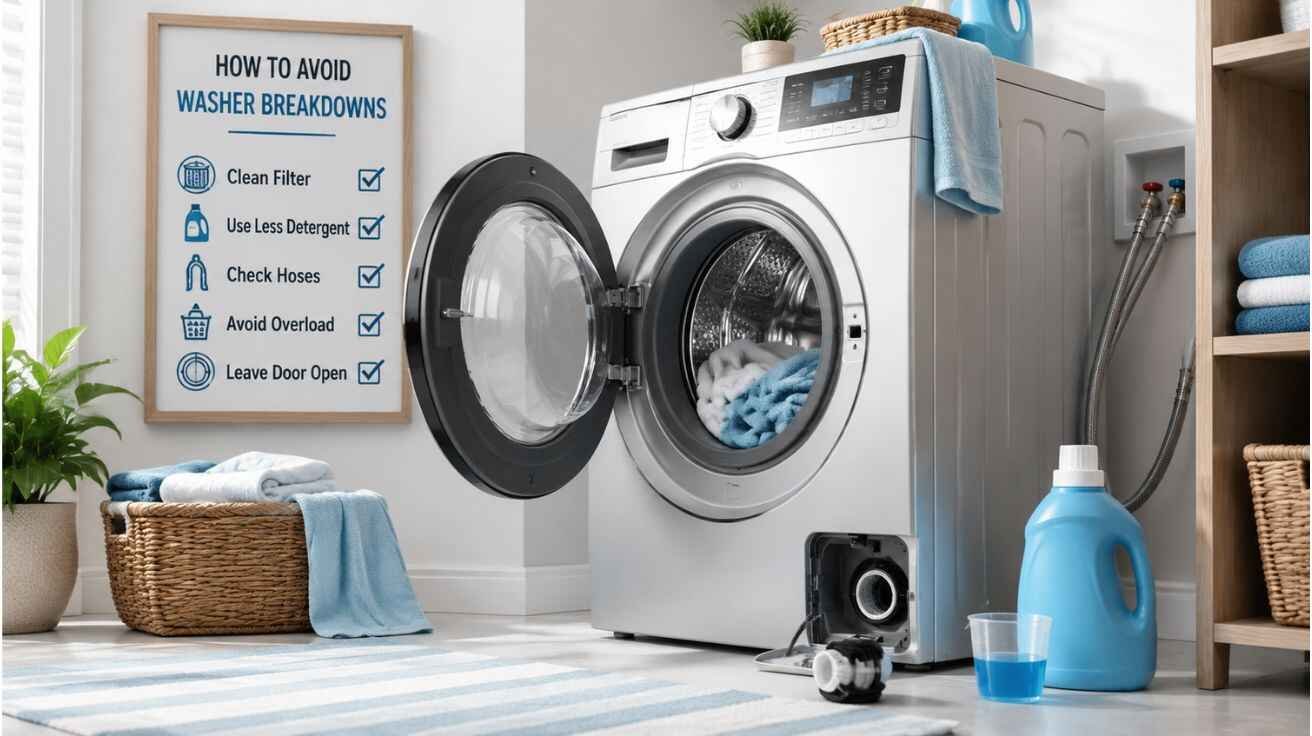
    • Do not overload the machine
    • Use correct detergent and proper quantity
    • Clean drain pump filter regularly
    • Wipe door gasket after each wash
    • Leave washer door open for airflow
    • Clean detergent drawer monthly
    • Run drum clean cycle every 30 days
    • Inspect hoses for leaks or cracks
    • Keep machine properly leveled
    • Remove items from pockets before washing

    These simple actions prevent most costly repairs.

    1. Avoid Overloading the Washing Machine

    Overloading is the number one cause of washer damage. When the drum is too full, the motor, belt, and bearings work under excessive pressure. This leads to vibration, poor cleaning, and mechanical wear.

    A good rule: clothes should move freely inside the drum. You should always be able to fit your hand on top of the load.

    Overloading can cause:

    • Drum imbalance
    • Motor overheating
    • Drain failure
    • Excess vibration
    • Shortened machine lifespan

    Heavy items like blankets and rugs should be washed separately.

    2. Use the Right Detergent Type and Amount

    Using the wrong detergent or too much detergent is a major hidden cause of washer breakdowns.

    High-efficiency (HE) machines require low-sudsing detergent. Regular detergent produces excess foam that clogs pipes and reduces washing efficiency.

    Too much detergent leads to:

    • Soap residue buildup
    • Bad odor inside drum
    • Drain blockage
    • Mold formation
    • Poor rinsing performance

    Always measure detergent instead of guessing.

    3. Clean the Drain Pump Filter Regularly

    The drain filter collects lint, coins, hairpins, and small objects. If it becomes clogged, the washer will not drain properly.

    Common symptoms of a blocked filter:

    • Water remains in drum
    • Drain error codes
    • Bad smell
    • Slow spin cycle

    Cleaning it every 1–3 months prevents pump damage and drainage failure.

    4. Wipe the Door Seal (Gasket)

    Front-load washers have a rubber gasket that traps moisture, lint, and detergent residue. If not cleaned, it becomes a breeding ground for mold and odor.

    After every wash:

    • Wipe the rubber seal
    • Remove trapped water
    • Check for small objects

    This prevents leaks, smell, and mold buildup.

    5. Leave Door Open After Washing

    Moisture trapped inside a closed washer causes mold growth and bad odor. Always leave the door slightly open after each wash cycle.

    This allows:

    • Air circulation
    • Faster drying
    • Mold prevention
    • Fresh-smelling drum

    This is one of the simplest but most effective maintenance habits.

    6. Clean Detergent Drawer Monthly

    The detergent drawer collects soap and fabric softener residue. Over time, it becomes sticky and blocked.

    Monthly cleaning steps:

    • Remove drawer
    • Wash with warm water
    • Scrub residue
    • Dry completely before reinserting

    This ensures proper detergent flow and prevents buildup inside the machine.

    7. Run Monthly Drum Cleaning Cycle

    Even if the washer looks clean, internal residue builds up over time.

    Run a drum clean cycle every 30 days using:

    • Washer cleaning tablet
    • Or hot empty cycle

    This removes:

    • Hidden detergent buildup
    • Bacteria
    • Bad odor
    • Limescale deposits

    8. Keep Washer Properly Balanced

    An unbalanced washer causes violent shaking during spin cycles. This can damage suspension rods and bearings.

    To prevent this:

    • Adjust leveling feet
    • Use a spirit level
    • Avoid uneven loads
    • Do not overload heavy items

    If shaking continues after leveling, internal repair may be required.

    9. Inspect Water Hoses

    Water inlet and drain hoses are often ignored until they leak.

    Check regularly for:

    • Cracks
    • Bulges
    • Leaks
    • Loose connections

    Replace hoses every 3–5 years for safety. Hose failure can cause serious water damage in your home.

    10. Empty Pockets Before Washing

    Small objects cause big damage.

    Coins, keys, pins, and paper can:

    • Block drain pump
    • Damage drum
    • Tear clothes
    • Cause strange noises

    Always check pockets before starting a wash.

    11. Use Correct Wash Cycle

    Using the wrong cycle puts unnecessary stress on the machine.

    Examples:

    • Use normal cycle for daily clothes
    • Delicate cycle for soft fabrics
    • Heavy cycle only for towels or bedding

    Wrong cycle selection increases wear and reduces cleaning efficiency.

    12. Do Not Ignore Early Warning Signs

    Washers usually show signs before breaking completely.

    Warning signs include:

    • Loud grinding noise
    • Burning smell
    • Water leakage
    • Drum not spinning
    • Drain errors
    • Excess vibration

    Stop using the machine immediately if these appear and call a technician.

    Front-Load vs Top-Load Maintenance Difference

    Front-Load Washers:

    • Need gasket cleaning
    • Require door left open
    • More prone to mold

    Top-Load Washers:

    • Less mold risk
    • More vibration issues
    • Need load balancing

    Both types require filter cleaning and hose inspection.

    Weekly Maintenance Checklist

    • Wipe gasket
    • Remove clothes immediately
    • Check pockets
    • Avoid overload
    • Leave door open
    • Check leaks

    Monthly Maintenance Checklist

    • Clean filter
    • Clean detergent drawer
    • Run drum clean cycle
    • Inspect hoses
    • Check leveling

    Common Causes of Washer Breakdown

    • Overloading
    • Excess detergent use
    • Clogged filter
    • Moisture buildup
    • Poor leveling
    • Ignored warning signs

    Most breakdowns are preventable with routine care.

    FAQs

    1. How often should I service my washing machine to avoid breakdowns?

    You should service your washing machine at least once a year. However, basic maintenance like cleaning the filter, gasket, and drum should be done monthly to prevent common issues.

    2. What is the main reason washing machines break down?

    The most common reason is user-related issues such as overloading, using too much detergent, clogged drain filters, and lack of regular cleaning. These small habits gradually damage internal parts

    3. Can overloading a washing machine damage it permanently?

    Yes. Overloading puts stress on the motor, drum, and bearings. Over time, it can cause vibration problems, poor spinning, and even permanent mechanical failure.

    4. Why does my washing machine smell bad?

    Bad smell is usually caused by detergent buildup, trapped moisture, dirty rubber gasket, or a clogged drain filter. Leaving the door closed after washing also increases odor and mold growth.

    5. How long does a washing machine usually last with proper care?

    A well-maintained washing machine can last 10–15 years. Regular cleaning, correct load size, and proper detergent use significantly extend its lifespan.
  • 15 Washing Machine Maintenance Tips & Repair Guide

    15 Washing Machine Maintenance Tips & Repair Guide

    A washer usually does not fail overnight. It gives small warnings first: a musty smell, slow draining, shaking during the spin cycle, detergent residue, or a small leak behind the machine.

    Quick Washing Machine Maintenance Checklist

    FrequencyWhat to Do
    After every washRemove clothes and leave the door or lid open
    WeeklyWipe the rubber gasket, lid area, and detergent drawer
    MonthlyRun a clean washer cycle and clean the drain pump filter
    Every 3–6 monthsInspect inlet hose, drain hose, and water supply hose
    YearlyCheck leveling, vibration, leaks, and hose condition

    Manufacturers commonly recommend cleaning the detergent drawer, airing out the washer, checking pockets for small objects, and cleaning filters to prevent drainage and water issues.

    Why Washing Machine Care Matters ?

    Poor washer care creates four common problems: odor, mold, leaks, and poor cleaning performance. Moisture trapped inside the drum can lead to mildew.

    Too much detergent can leave soap residue inside the dispenser drawer, gasket, and washer drum. A cracked hose can turn into a leak.

    15 Washing Machine Maintenance Tips

    1. Remove Clothes Immediately

    Do not leave wet laundry inside the drum for hours. Moisture encourages bad odor and mildew. Remove clothes soon after the wash cycle ends.

    2. Leave the Door or Lid Open

    After every wash, keep the washing machine door slightly open to let moisture escape.This lets air move through the drum and helps reduce mold smell and trapped moisture, especially in front load washers.

    3. Use the Right Detergent

    If you own a high-efficiency washer, use HE detergent. The wrong detergent can create excess suds and residue buildup.

    4. Avoid Too Much Detergent

    More detergent does not mean cleaner clothes. It can leave detergent residue on clothes and inside the washer. Use the amount recommended on the detergent label and your washer manual.

    5. Do Not Overload the Washer

    Overloading strains the drum, motor, and suspension system. It also causes poor cleaning, noisy spinning, and washing machine shaking.

    6. Clean the Detergent Drawer

    Remove the dispenser drawer, rinse it with warm water, scrub residue with a soft brush, and dry it before placing it back. Detergent and fabric conditioner buildup may cause odor, mold, and drawer leaks.

    7. Wipe the Rubber Gasket

    For front load washer maintenance, this step matters. Hair, lint, coins, moisture, and soap residue can sit inside the rubber seal. Wipe the door weekly to prevent mold, smell, and buildup.

    8. Clean the Drum Monthly

    Run a self-clean cycle or clean washer cycle once a month. Monthly drum cleaning helps maintain freshness and reduce odor development.

    9. Clean the Drain Pump Filter

    A clogged drain pump filter can cause slow draining, bad smell, and clothes still wet after washing. Put a towel under the filter area before opening it.

    10. Check Water Inlet Filters

    If the washer fills slowly, the mesh filter may be blocked by dirt or mineral deposits. Clean inlet filters carefully and reconnect hoses tightly.

    11. Inspect Washing Machine Hoses

    Look for cracks, bulges, rust, damp fittings, or loose connections. Hose inspection is a key part of washing machine leak prevention.

    12. Keep the Washer Level

    An unlevel machine shakes during the spin cycle. Adjust the feet until the washer sits stable on the floor.

    13. Leave Space Behind the Washer

    Do not crush the inlet hose or drain hose against the wall. A little space helps airflow and prevents hose damage.

    14. Check Pockets Before Washing

    Coins, keys, pins, and hair clips can damage the drum, block the drain pump, or harm the door seal. This small habit prevents costly repairs.

    15. Watch Warning Signs

    Do not ignore burning smells, repeated leaks, grinding sounds, error codes, or water not draining. These signs need quick attention.

    Front Load Washer Maintenance

    Front loaders need extra care because the rubber gasket traps moisture. Wipe the gasket weekly, leave the door open, clean the drain filter monthly, and use HE detergent.

    This helps prevent front load washer smell, mold, and residue buildup.

    Top Load Washer Maintenance

    Top load washer maintenance is usually easier, but buildup still happens.

    Clean the drum monthly, wipe the lid and rim, avoid overloading, and check the agitator area if your model has one.

    Common Washing Machine Problems and Fixes

    ProblemLikely CauseMaintenance Fix
    Smelly washing machineMoisture, mold, detergent buildupClean drum, gasket, and drawer
    Washer shakingOverload or unlevel machineReduce load and adjust feet
    Not drainingClogged filter or blocked drainClean drain pump filter
    LeakingHose or gasket issueInspect hoses and rubber seal
    Slow fillingDirty inlet filterClean mesh filter
    Clothes still wetDrainage or spin issueClean filter and check load size

    Maintenance Mistakes to Avoid

    The biggest mistakes are simple: using too much detergent, keeping the door closed, ignoring the drain filter, overloading the drum, and never checking hoses. These habits slowly damage performance and shorten appliance lifespan.

    Should You Use Vinegar?

    Be careful with vinegar. It is popular online, but regular use may damage rubber seals, hoses, and other internal components over time.

    A safer option is to use a manufacturer-approved washing machine cleaner. Always check your washer manual before using vinegar, bleach, or baking soda.

    When to Call Fix Master Appliances for Washing Machine Repair Service

    Call Fix Master Appliances for washing machine repair service if your washer has electrical issues, a burning smell, repeated leaks, loud grinding noise, a drum that will not spin, or drainage problems after filter cleaning. DIY maintenance can fix small issues, but forcing a faulty washer may cause more damage and increase repair costs.

    FAQs

    How often should I clean my washing machine?

    Clean the drum monthly and wipe the gasket, lid area, and detergent drawer weekly.

    Why does my washing machine smell?

    Usually because of trapped moisture, mildew, detergent residue, or a dirty gasket, drum, drawer, or filter.

    How do I clean a washing machine filter?

    Turn off the washer, place a towel below the filter, open it slowly, remove debris, rinse it, and secure it again. Never force the filter if it feels stuck.

    Why is my washer shaking?

    Common reasons include overloading, uneven flooring, or poor machine leveling.