
A washer usually makes loud noise because of an unbalanced load, overloading, uneven flooring, loose objects, a clogged drain pump filter, worn drum bearings, damaged shock absorbers, or loose internal parts. Some washer sounds are normal, but loud banging, grinding, roaring, or repeated vibration should be checked early to prevent costly damage.
Washer Noise Problems
Washer noise problems are common, but every sound does not mean your washing machine is damaged. A washer normally makes some noise while filling, washing, draining, and spinning. However, if the noise becomes loud, unusual, or suddenly worse, it may be a sign of a problem.
Ignoring washer noise can lead to bigger issues such as poor spinning, water leakage, drainage failure, motor strain, or expensive repair. This guide explains the most common washer noise problems, their causes, simple fixes, and when you should call a professional technician.
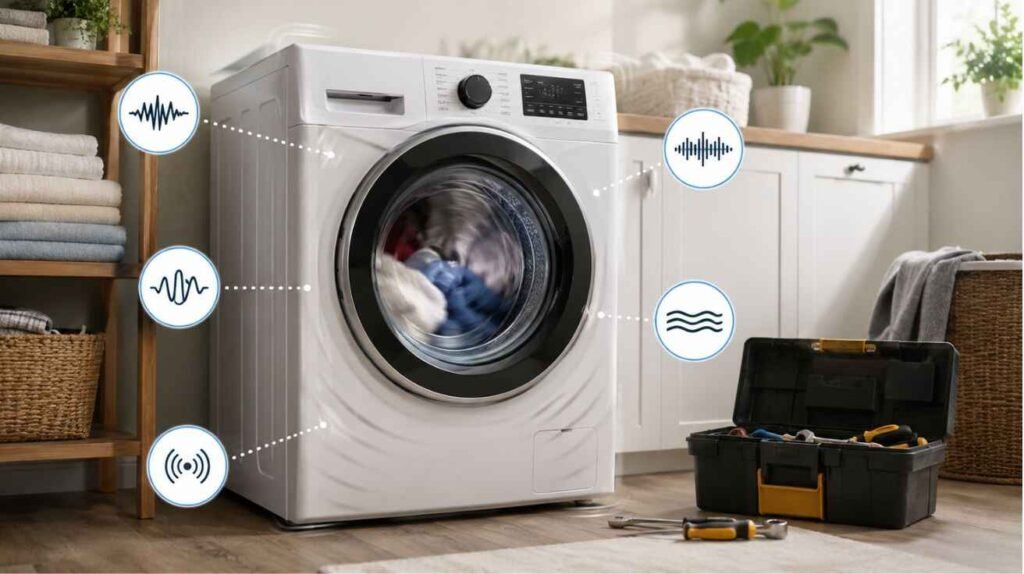
1. Banging or Thumping Noise During Spin Cycle
A loud banging noise during the spin cycle usually happens when the laundry load is unbalanced. Heavy items like towels, bedsheets, jeans, and blankets can collect on one side of the drum and make the washer shake.
Common causes include:
- Unbalanced laundry load
- Overloaded washer drum
- Washer not level on the floor
- Weak flooring
- Worn shock absorbers or suspension rods
- Shipping bolts still installed in a new washer
First, pause the washer and spread the clothes evenly inside the drum. If the washer is overloaded, remove some items and restart the cycle. Also check if the washer is level. If the banging continues with normal loads, internal suspension parts may need repair.
2. Grinding or Scraping Noise
A grinding or scraping noise should be checked quickly. Sometimes small objects like coins, keys, buttons, hairpins, or bra wires get stuck inside the drum, rubber seal, or drain pump area.
Possible causes include:
- Foreign object inside the drum
- Object stuck in the pump filter
- Worn drum bearings
- Damaged pulley
- Loose internal part
Turn off the washer and inspect the drum carefully. Check the rubber door seal if you have a front-load washer. If the grinding noise becomes louder during spinning, the drum bearings may be worn. Bearing problems usually need professional repair.
3. Rattling Noise
A rattling washer often means something loose is vibrating. The sound may come from inside the washer or from hoses and cords touching the wall.
Common causes include:
- Coins or buttons inside the drum
- Loose drain hose
- Water hoses hitting the wall
- Loose screws or panels
- Washer feet not firmly touching the floor
Check around the washer first. Make sure the drain hose, water hoses, and power cord are not hitting the wall or cabinet. Then check the drum, pockets, and filter area. Fixing rattling early can prevent more vibration damage.
4. Humming or Buzzing Noise
A humming or buzzing noise usually means the washer is trying to work but something is blocking the process. If it happens while filling, there may be a water supply issue. If it happens while draining, the drain pump or filter may be blocked.
Common causes include:
- Clogged drain pump filter
- Blocked drain hose
- Kinked water hose
- Faulty drain pump
- Water inlet issue
- Electrical fault
Do not keep running the washer if it hums but does not fill, drain, or spin. Check the water supply, hoses, and filter. If the noise continues, call a technician.
5. Squealing or High-Pitched Noise
A squealing washer sound often comes from friction or extra pressure on moving parts. It may happen when the washer is overloaded or when a belt, pulley, or motor part is worn.
Possible causes include:
- Overloaded washer
- Worn belt
- Motor issue
- Drive pulley problem
- Object rubbing inside the drum
Try reducing the load first. If the squealing sound continues even with a normal load, the washer should be inspected before the problem gets worse.
6. Roaring or “Airplane” Noise During Spin
If your washer sounds like an airplane taking off, especially during the spin cycle, it may have worn drum bearings. This sound usually becomes louder as the drum spins faster.
Warning signs include:
- Loud roaring during spin
- Drum feels rough when turned by hand
- Drum feels loose
- Noise gets worse over time
This is not a simple DIY repair. Bearing or tub-related problems should be checked by a professional washer repair technician. If the washer is very old, compare the repair cost with the price of replacement.
Normal Washer Sounds vs Problem Sounds
Some washer sounds are normal, such as water filling, soft humming while draining, light clicking, and mild vibration during high-speed spin.
Problem sounds include:
- Loud banging every cycle
- Grinding or scraping
- Roaring during spin
- Washer shaking violently
- Buzzing with no draining
- Squealing with normal loads
- Metallic knocking
- Noise with burning smell
If the noise is loud, sudden, or getting worse, stop using the washer and inspect it safely.
Quick Troubleshooting Checklist
| Step | What to Check | What to Do |
|---|---|---|
| 1 | Laundry load | Balance the laundry load evenly inside the drum. |
| 2 | Overloading | Avoid overloading the washer drum. Remove extra clothes if needed. |
| 3 | Washer level | Check if the washer is level on the floor. |
| 4 | Washer feet | Make sure all washer feet touch the floor firmly. |
| 5 | Small objects | Remove coins, keys, buttons, and small objects from pockets. |
| 6 | Drum and rubber seal | Check the drum and rubber seal for trapped items. |
| 7 | Drain pump filter | Clean the drain pump filter if it is accessible. |
| 8 | Hoses touching wall | Make sure hoses are not hitting the wall or cabinet. |
| 9 | Kinked hoses | Check that water and drain hoses are not bent or kinked. |
| 10 | Shipping bolts | For a new washer, confirm that shipping bolts are removed. |
| Final Check | Basic troubleshooting | These simple checks can solve many washer noise problems. |
When to Call a Professional
Call a technician if your washer still makes noise after basic checks or if you notice grinding, roaring, burning smell, water leakage, error codes, violent shaking, or poor draining.
For reliable washer noise repair, FixMaster Appliances can inspect the problem safely and help prevent further damage.
How to Prevent Washer Noise Problems
To reduce washer noise, avoid overloading, balance heavy items, empty pockets before washing, keep the washer level, clean the filter regularly, and use the correct detergent amount. Regular care helps protect the drum, motor, pump, and suspension system.
FAQs About Washer Noise Problems
1. Why is my washer loud during the spin cycle?
A washer is usually loud during spinning because of an unbalanced load, overloading, uneven leveling, worn bearings, or weak suspension parts.
2. Is grinding noise from a washer serious?
Yes, grinding noise can be serious. It may be caused by a trapped object, worn bearing, damaged pulley, or internal rubbing. Stop using the washer and inspect it.
3. Why does my washer sound like an airplane?
An airplane-like noise during spin often points to worn drum bearings or a failing tub seal. This usually needs professional repair.
4. Why is my washer shaking and banging?
A washer shakes and bangs because of uneven clothes, overloading, poor leveling, weak flooring, or worn shock absorbers.
5. Can a clogged drain pump make noise?
Yes, a clogged drain pump or filter can cause humming, buzzing, clicking, or grinding noise during draining or spinning.