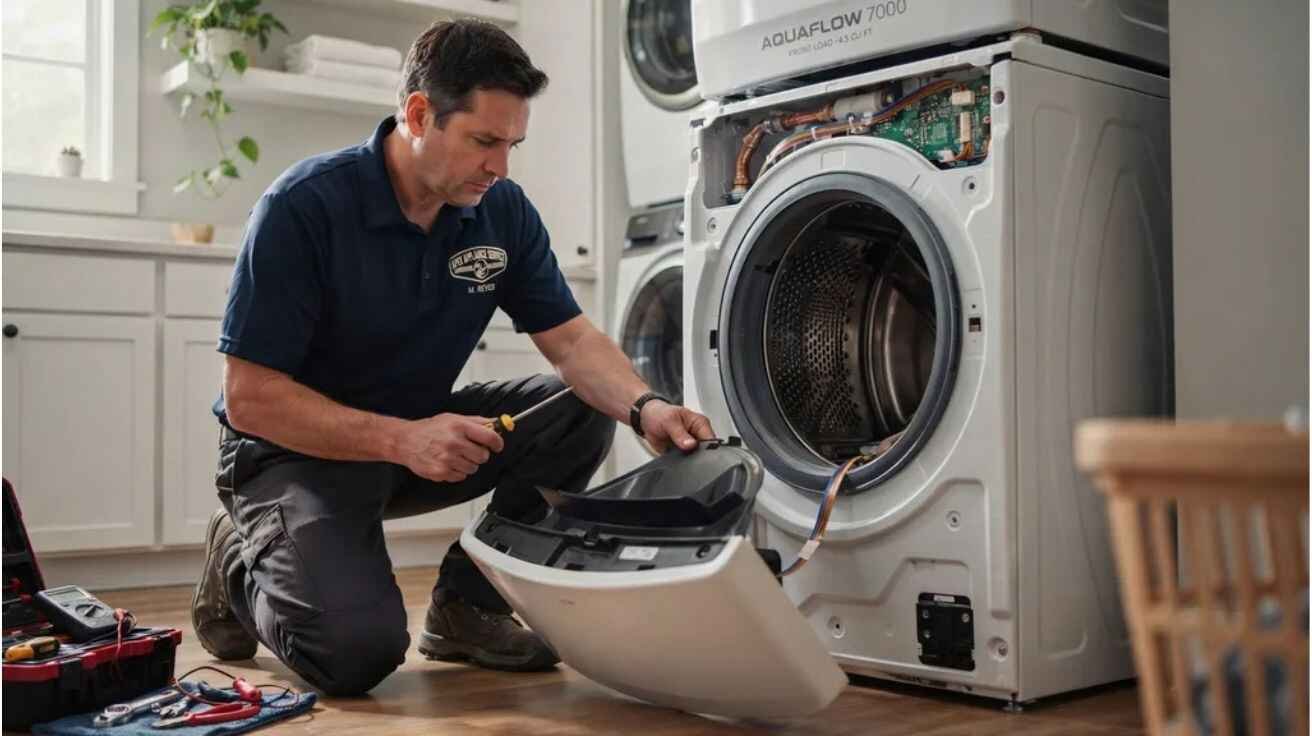
A front load washer repair guide helps users identify, troubleshoot, and fix common washing machine problems such as not spinning, not draining, leakage, and bad odor. Most issues are caused by clogged filters, overloading, or detergent buildup. Basic repairs include cleaning the drain filter, checking hoses, and resetting error codes, while complex issues like motor or PCB failure require professional service.
Understanding Front Load Washer Systems
A front load washing machine is a complex appliance built around a horizontal rotating drum system supported by electronic sensors, water inlet valves, a drain pump, a motor system, and a control board.
Unlike top-load machines, front load washers rely on precise balancing and sealed water circulation. This makes them efficient but also more sensitive to misuse and maintenance neglect.
Core components include:
- Drum system
- Motor and belt drive
- Water inlet valve
- Drain pump system
- Electronic control board
- Door lock sensor and rubber gasket
When one system fails, overall performance is affected immediately.
Why Front Load Washers Break Down Frequently
Most breakdowns are not due to manufacturing defects but user habits and maintenance issues.
Common causes include:
- Overloading the drum
- Using excess detergent
- Ignoring filter cleaning
- Leaving moisture inside the gasket
- Hard water mineral buildup
Technician reports show that a large percentage of service calls are preventable through proper care and routine maintenance.
Most Common Problems Explained by Technicians
Washer Not Spinning
Causes:
- Broken drive belt
- Faulty motor
- Load imbalance
- Door lock malfunction
Fix:
Redistribute clothes evenly and restart the cycle.
Washer Not Draining
Causes:
- Clogged drain filter
- Pump blockage
- Kinked drain hose
Fix:
Clean the drain filter regularly and remove debris.
Water Leakage Issues
Causes:
- Damaged door gasket
- Loose inlet hose
- Seal cracks in detergent drawer
Strange Noise or Vibration
Causes:
- Uneven floor placement
- Foreign objects inside drum
- Worn drum bearings
Bad Odor Problem
Causes:
- Mold in rubber gasket
- Standing water in drum
- Detergent residue buildup
Step-by-Step Front Load Washer Repair Guide
Safety First Approach
Before starting any repair:
- Disconnect power supply
- Turn off water connection
- Ensure dry working conditions
- Use protective gloves
Diagnostic Workflow
Professional technicians follow a structured process:
- Check error codes
- Inspect power supply
- Test water inlet
- Inspect drainage system
- Check drum movement
This method reduces guesswork and improves repair accuracy.
Required Tools
- Screwdriver set
- Multimeter
- Flashlight
- Cleaning brush
- Pliers
- Towels
DIY Repair vs Professional Service
DIY repairs are suitable for:
- Cleaning filters
- Fixing hose leaks
- Resetting error codes
- Cleaning gasket
Professional service is required for:
- Motor replacement
- PCB failure
- Drum bearing damage
- Electrical faults
Hidden Causes Most Users Don’t Know
Many washing machine issues are caused by hidden factors such as:
- Low water pressure
- Hard water damage
- Incorrect detergent type
- Frequent cold wash cycles
These issues slowly reduce machine performance over time.
Expert Technician Insights
Experienced technicians highlight three major truths:
Maintenance Reduces Most Breakdowns
Regular cleaning and inspection significantly reduce failure rates.
Most Repairs Are Preventable
A large number of breakdowns are caused by neglect rather than hardware failure.
Detergent Misuse Causes Long-Term Damage
Excess detergent leads to foam overload, clogging, and sensor errors.
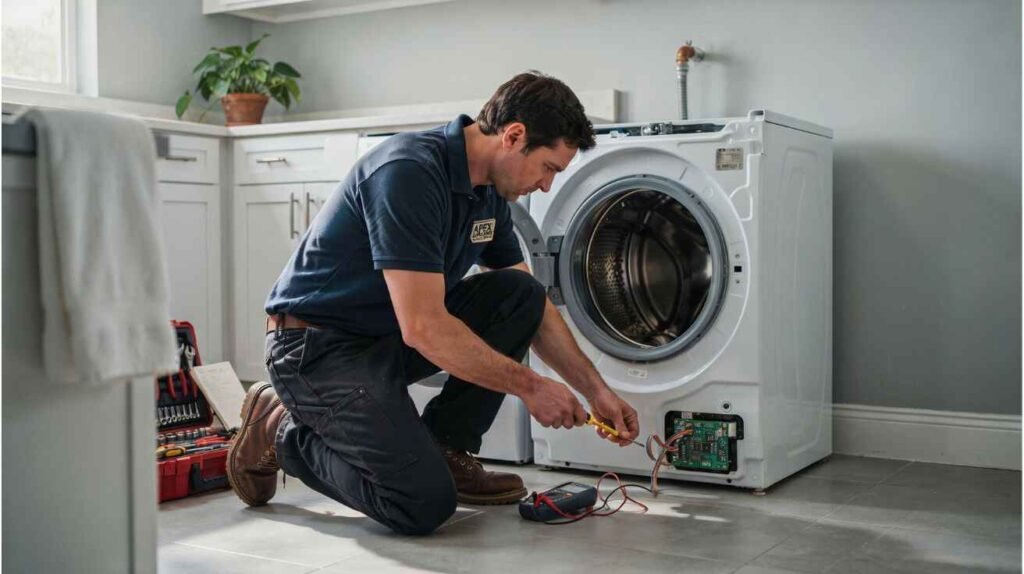
Maintenance Strategy to Prevent Repairs
Recommended routine:
- Clean drain filter weekly
- Run drum cleaning cycle monthly
- Keep door open after use
- Use HE detergent only
- Avoid overloading
Proper maintenance can extend machine lifespan significantly.
Error Codes and Smart Diagnosis
Common error codes:
- E1: Water inlet issue
- E2: Drainage failure
- E3: Door lock issue
Understanding these codes helps speed up troubleshooting.
Cost of Front Load Washer Repair
Repair costs vary based on issue:
- Minor cleaning or filter repair: low cost
- Hose or seal replacement: moderate cost
- Pump or motor repair: higher cost
- PCB or drum repair: expensive
Preventive maintenance is always more cost-effective than emergency repair.
When to Call Fix Master Appliances for Front Load Washer Repair Service
Call Fix Master Appliances for Front Load Washer Repair service if your washer develops electrical faults, emits a burning smell, shows repeated water leaks, produces loud grinding noises, has a drum that will not spin, or continues facing drainage problems even after filter cleaning. While basic DIY maintenance can resolve minor issues, forcing a malfunctioning machine can worsen the damage and lead to higher repair costs.
Conclusion
The Front Load Washer Repair Guide provides a complete understanding of how washing machines fail, how to fix common issues, and how to prevent future damage.
Most washing machine failures are preventable with proper maintenance and user awareness.
FAQs
Why is my front load washer not spinning?
Usually due to load imbalance, motor failure, or belt issues.
How do I fix a washer not draining?
Clean the drain filter and check for hose blockages.
Why does my washer smell bad?
Mold and detergent buildup inside the rubber gasket are common causes.
Can I repair it myself?
Yes for basic issues like cleaning and resets, but not for electrical faults.
How often should I clean my washer?
At least once per month for deep cleaning and weekly filter checks.
Leave a Reply