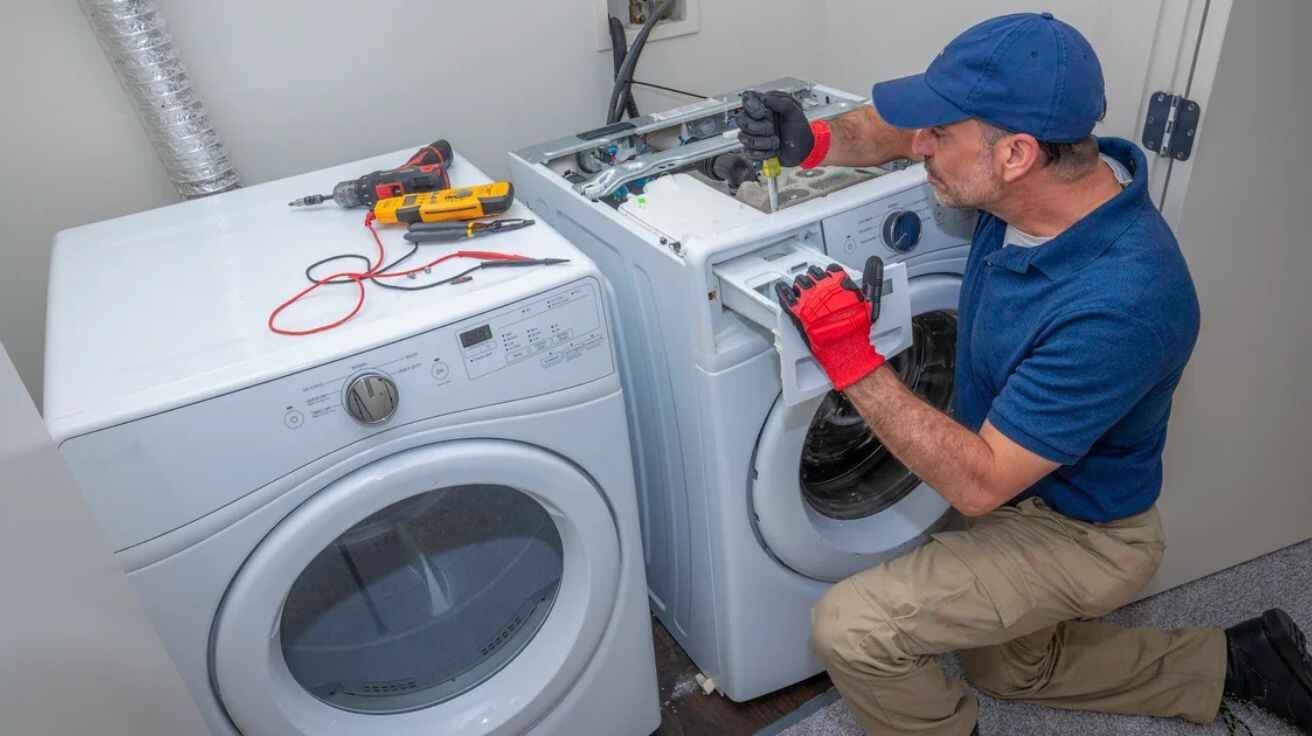
You should repair your washer if it is less than 7 years old, the repair cost is low, the problem is small, and parts are easily available. You should replace your washer if it is more than 10 years old, repairs are expensive, it breaks down again and again, or it has safety issues like burning smell, sparks, smoke, or major leaks.
Why This Decision Matters
Many people choose the cheapest option without thinking about the future. A small repair on a good washer can be a smart choice. But spending a large amount on an old and weak washer can become a waste of money. If the machine is already noisy, inefficient, rusty, or close to the end of its life, another problem may appear soon after the first repair.
The right choice depends on washer age, repair cost, new washer price, problem type, and overall condition.
The 50% Repair Rule
The 50% rule is one of the easiest ways to decide. If the repair cost is less than 50% of the price of a similar new washer, repair may be worth it. If the repair cost is 50% or more, replacement is usually better.
For example, if a new washer costs $800 and the repair is $200, repairing makes sense. But if the repair is $450 or $500, buying a new washer may be smarter. A new washer also gives you a fresh warranty, better performance, and peace of mind.
When You Should Repair a Washer
Repair is usually the best option when the washer is still new or in good condition. If your washer is under 5 years old and has not had many past problems, it is usually worth repairing. Common repairable problems include a clogged drain hose, blocked pump filter, broken belt, faulty lid switch, damaged door latch, or loose hose.
A washer that does not drain may only need filter cleaning or a drain pump repair. A washer that shakes too much may only need leveling or a smaller laundry load. A washer that does not start may have a door lock or power issue. These problems are often cheaper than replacement.
You should also repair the washer if it is still under warranty. Before paying a technician, check your purchase receipt, warranty card, or manufacturer website. Some repairs may be covered fully or partly.
When You Should Replace a Washer
Replacement is usually better when the washer is old and the repair is expensive. If your washer is more than 10 years old and needs a major repair, it may not be worth spending money on it. Older washers often develop repeated problems because many internal parts are already worn.
You should replace your washer if it has a damaged motor, cracked tub, bad drum bearing, failed control board, severe rust, or repeated water leaks. These repairs can be expensive, and sometimes the cost comes close to buying a new machine.
Safety problems are also a strong reason to replace a washer. If you notice burning smell, smoke, sparks, or water leaking near electrical parts, stop using the machine. Unplug it and call a qualified technician. If the washer is very old, replacement may be the safer choice.
Washer Age Guide
If your washer is 1 to 3 years old, repair it unless the damage is very serious. It should still have many useful years left.
If your washer is 4 to 7 years old, repair is usually a good choice for small and medium problems.
If your washer is 8 to 10 years old, compare the repair cost with the price of a new washer before deciding.
If your washer is more than 10 years old, replacement is often better, especially if it has already needed repairs before.
Common Washer Problems: Repair or Replace?
If your washer is not draining, the problem may be a clogged hose, blocked filter, or faulty drain pump. This is usually repairable.
If your washer is not spinning, it may be an unbalanced load, broken belt, lid switch issue, motor fault, or control board problem. Small issues are worth repairing, but motor and control board problems on an old washer may not be worth fixing.
If your washer is leaking, check the hoses, door gasket, and water connections. Small leaks can be repaired. But if the tub is cracked or leaks keep coming back, replacement may be better.
If your washer makes a loud grinding or roaring noise, it may have bad bearings or drum problems. These repairs can be costly, especially in front-load washers.
Check Before Calling a Technician
Before spending money, do a few simple checks. Make sure the washer is plugged in. Check the circuit breaker. Confirm that water valves are open. Look for a blocked or bent drain hose. Make sure the washer is level. Try a smaller load if the machine is shaking.
Do not open electrical parts yourself. If you smell burning, see sparks, or notice water near wires, stop using the washer and call a professional.
Final Verdict
The best way to decide when to replace vs repair a washer is to look at age, repair cost, safety, and condition. Repair a newer washer with a small problem. Replace an old washer with expensive repairs, repeated breakdowns, poor performance, or safety risks. In simple words, spend small money on a good washer, but do not spend big money on a machine that is already near the end of its life.
FAQs
1. Is it worth repairing a 10-year-old washer?
A small repair may be worth it, but major repairs like motor, drum, or control board replacement are usually not a good choice.
2. How much is too much for washer repair?
If the repair costs 50% or more of a similar new washer, replacement is usually better.
3. Should I replace my washer if it is not spinning?
Not always. It may be a simple issue like an unbalanced load or broken belt. But if the motor or control board is bad, replacement may be better.
4. What washer problems are usually worth fixing?
Clogged drains, faulty hoses, door latch issues, belts, filters, and minor pump problems are usually worth fixing.
5. What washer problems are not worth fixing?
Cracked tubs, bad bearings, failed motors, repeated leaks, severe rust, and expensive control board problems are often not worth fixing on old washers.