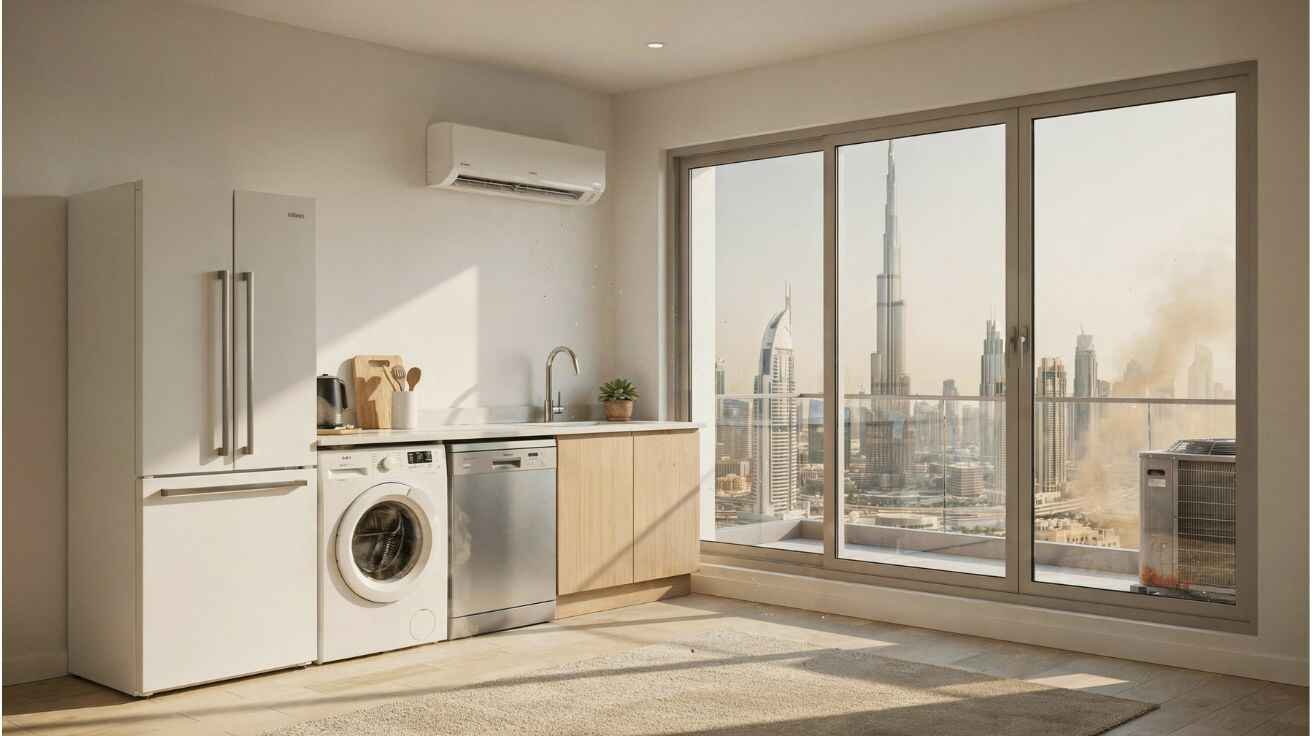
Dubai’s climate affects appliances because extreme heat, humidity, dust, sand, and coastal salty air make machines work harder than normal. Air conditioners run longer, refrigerators struggle to release heat, washing machines develop odor and mold faster, and electronic parts may face dust buildup or corrosion. Regular cleaning, ventilation, filter maintenance, and professional servicing help extend appliance life in Dubai homes.
How Dubai Climate Affects Appliances
Dubai offers modern living, but its climate can be tough on home appliances. Long summers, high temperatures, dusty air, humidity, and occasional sandstorms create extra pressure on machines used every day. This is why understanding how Dubai climate affects appliances is important for homeowners, tenants, landlords, and property managers.
A refrigerator may stop cooling properly because of heat and dusty coils. A washing machine may smell bad because moisture stays inside the drum. An air conditioner may consume more electricity because dust blocks airflow and humidity makes cooling harder. These issues may look small at first, but if ignored, they can lead to expensive repairs or appliance replacement.
Why Dubai Climate Is Hard on Appliances
Dubai’s weather affects appliances mainly through four factors: heat, humidity, dust, and salt air.
Extreme Heat
High temperatures make appliances work harder. Air conditioners run for longer hours, refrigerators need more power to keep food cold, and dryers or washing machine motors may heat up quickly. Over time, heat can affect compressors, wiring, rubber seals, plastic parts, and sensors.
Humidity
Humidity increases moisture inside homes, especially in kitchens, bathrooms, and laundry areas. This can cause mold, bad smells, rust, and corrosion. Washing machines, dishwashers, AC ducts, and electronic boards are more vulnerable in humid conditions.
Dust and Sand
Dust and sand are common in Dubai. Fine particles can block AC filters, refrigerator coils, dryer vents, exhaust fans, and outdoor AC units. When airflow is blocked, appliances use more electricity and become less efficient.
Salt Air
Homes near coastal areas such as Dubai Marina, Jumeirah, JBR, and Palm Jumeirah may face salt-air exposure. Salt can speed up corrosion on outdoor AC units, screws, metal panels, and electrical terminals.
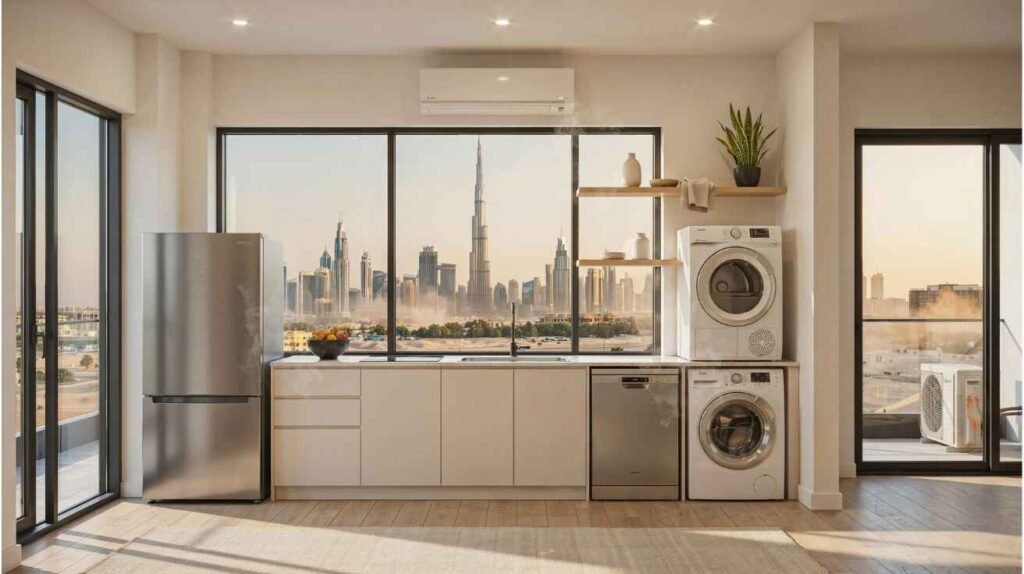
How Dubai Climate Affects Air Conditioners
Air conditioners are the most affected appliances in Dubai because they deal directly with heat, humidity, and dust. During summer, AC units run for long hours, which increases stress on compressors, fans, filters, and coils.
Common AC problems include weak cooling, high electricity bills, water leakage, musty smell, frozen coils, and noisy operation. Dust blocks filters and coils, while humidity increases the cooling load. If the outdoor unit is exposed to direct sunlight or sand buildup, it may overheat and lose efficiency.
To protect your AC, clean or replace filters regularly, keep the outdoor unit clear, check the drain line, and schedule professional servicing before peak summer. If cooling becomes weak or bills suddenly increase, do not delay inspection.
How Dubai Climate Affects Refrigerators
Refrigerators also suffer in Dubai’s heat. A fridge removes heat from inside and releases it through condenser coils. If the kitchen is hot or the coils are covered with dust, the refrigerator has to work harder.
Common refrigerator issues include poor cooling, compressor overheating, food spoiling faster, frost buildup, noisy operation, and damaged door seals. Heat from ovens, direct sunlight, and poor ventilation can make the problem worse.
Keep your refrigerator away from heat sources. Leave space behind and around the unit for airflow. Clean condenser coils every few months, especially in dusty homes. Also check the door gasket because weak seals allow warm air to enter, forcing the fridge to run continuously.
How Dubai Climate Affects Washing Machines
Washing machines are strongly affected by humidity because they already use water. Moisture can stay inside the drum, rubber gasket, detergent drawer, and drain hose. This often causes bad smell, mold, and detergent buildup.
In Dubai, dust and sand from clothes can also collect inside filters and hoses, especially after beach visits, outdoor work, or desert activities. Hard water may also leave mineral deposits inside the machine and reduce washing performance.
To prevent problems, leave the washing machine door slightly open after each wash. Wipe the rubber gasket, clean the detergent drawer, and run a monthly hot cleaning cycle. Also clean the drain filter as recommended by the manufacturer. If the washer leaks, shakes, smells bad, or fails to drain, call a technician before the issue becomes serious.
How Dubai Climate Affects Dishwashers
Dishwashers deal with water, detergent, heat, and food particles. In Dubai’s warm and humid environment, a dishwasher can develop odor, residue, cloudy dishes, blocked spray arms, and poor drying performance.
Clean the dishwasher filter weekly if you use it often. Check spray arm holes for food particles or mineral buildup. Use rinse aid to reduce water spots and keep the door slightly open after cycles so moisture can escape. If smell remains even after cleaning, the drain hose or internal filter may need professional inspection.
How Dubai Climate Affects Dryers
Dryers need proper airflow to remove moisture from clothes. In dusty Dubai homes, lint and dust can build up quickly in filters, vents, and ducts. This can cause long drying times, overheating, burning smell, and weak airflow.
Clean the lint filter after every load. Check the dryer vent regularly and make sure hot air is escaping properly. Avoid placing the dryer in a closed, humid space. If clothes stay damp after a full cycle, the issue may be a blocked vent, faulty heating element, or sensor problem.
How Dubai Climate Affects Small Appliances
Small appliances such as microwaves, coffee machines, kettles, air fryers, routers, and TVs can also be affected by heat, dust, and humidity. Dust can enter vents, while moisture can damage circuit boards and metal connectors.
Keep small appliances away from windows, steam, and direct sunlight. Clean vents gently and avoid using electronics in poorly ventilated areas. For kettles and coffee machines, descaling is important because mineral buildup can reduce performance.
Dubai Appliance Risk Matrix
| Appliance | Main Climate Risk | Warning Signs | Prevention |
|---|---|---|---|
| Air Conditioner | Heat, dust, humidity | Weak cooling, high bills, water leaks | Clean filters, service coils, clear drain line |
| Refrigerator | Heat, dust | Poor cooling, noisy compressor, hot sides | Clean coils, check door seals, allow ventilation |
| Washing Machine | Humidity, residue, hard water | Bad smell, mold, drainage issue | Leave door open, clean gasket, run monthly clean cycle |
| Dishwasher | Humidity, food buildup, hard water | Odor, cloudy dishes, poor draining | Clean filter, use rinse aid, inspect spray arms |
| Dryer | Dust, lint, poor airflow | Long drying time, overheating | Clean lint filter and vent |
| Microwave | Heat, moisture, food splatter | Burning smell, poor heating | Keep clean, check door seal, avoid overheating |
| Outdoor AC Unit | Heat, dust, salt air | Noise, corrosion, poor cooling | Shade correctly, clean unit, inspect metal parts |
Best Maintenance Schedule for Dubai Homes
For Dubai homes, appliance maintenance should be more frequent than in cooler climates.
Weekly: Clean visible dust, wipe washing machine seals, clean dishwasher filters, and remove dryer lint.
Monthly: Clean AC filters, run a washing machine cleaning cycle, inspect refrigerator seals, and check for leaks.
Every 3–6 months: Clean refrigerator coils, inspect dryer vents, deep-clean dishwasher parts, and check AC drain lines.
Yearly: Schedule professional inspection for ACs, refrigerators, washing machines, and other high-use appliances.
Warning Signs You Should Not Ignore
You should call a professional if you notice weak cooling, water leakage, burning smell, loud noise, bad odor, high electricity bills, rust marks, frequent error codes, or appliances becoming unusually hot. These signs often mean the appliance is under stress due to Dubai’s climate.
Conclusion
Dubai’s climate affects appliances through heat, humidity, dust, sand, and salt air. These conditions can reduce performance, increase electricity use, cause mold and odor, block airflow, and shorten appliance lifespan.
The best solution is preventive maintenance. Clean filters, coils, vents, seals, and drain lines regularly. Keep appliances ventilated and schedule professional service when needed. By understanding how Dubai climate affects appliances, you can prevent breakdowns, save money, and keep your home running smoothly.
FAQs
1. Does Dubai humidity damage appliances?
Yes, Dubai humidity can damage appliances by increasing moisture inside machines. It may cause mold, bad smell, rust, and corrosion, especially in washing machines, dishwashers, AC ducts, and electronic components.
2. Why does my AC bill increase in Dubai summer?
Your AC bill increases because the system runs longer to handle extreme heat and humidity. Dirty filters, blocked coils, poor insulation, or low refrigerant can make the AC work even harder.
3. Why is my refrigerator not cooling properly in Dubai?
A refrigerator may stop cooling properly because of high kitchen temperature, dusty condenser coils, weak door seals, poor ventilation, or compressor strain.
4. How often should I clean AC filters in Dubai?
In Dubai, AC filters should usually be checked monthly during heavy use. If your home is dusty, near construction, or the AC runs all day, filters may need more frequent cleaning.
5. How can I stop washing machine smell in Dubai?
Leave the washer door open after every wash, wipe the rubber gasket, clean the detergent drawer, remove wet clothes quickly, and run a monthly hot cleaning cycle.