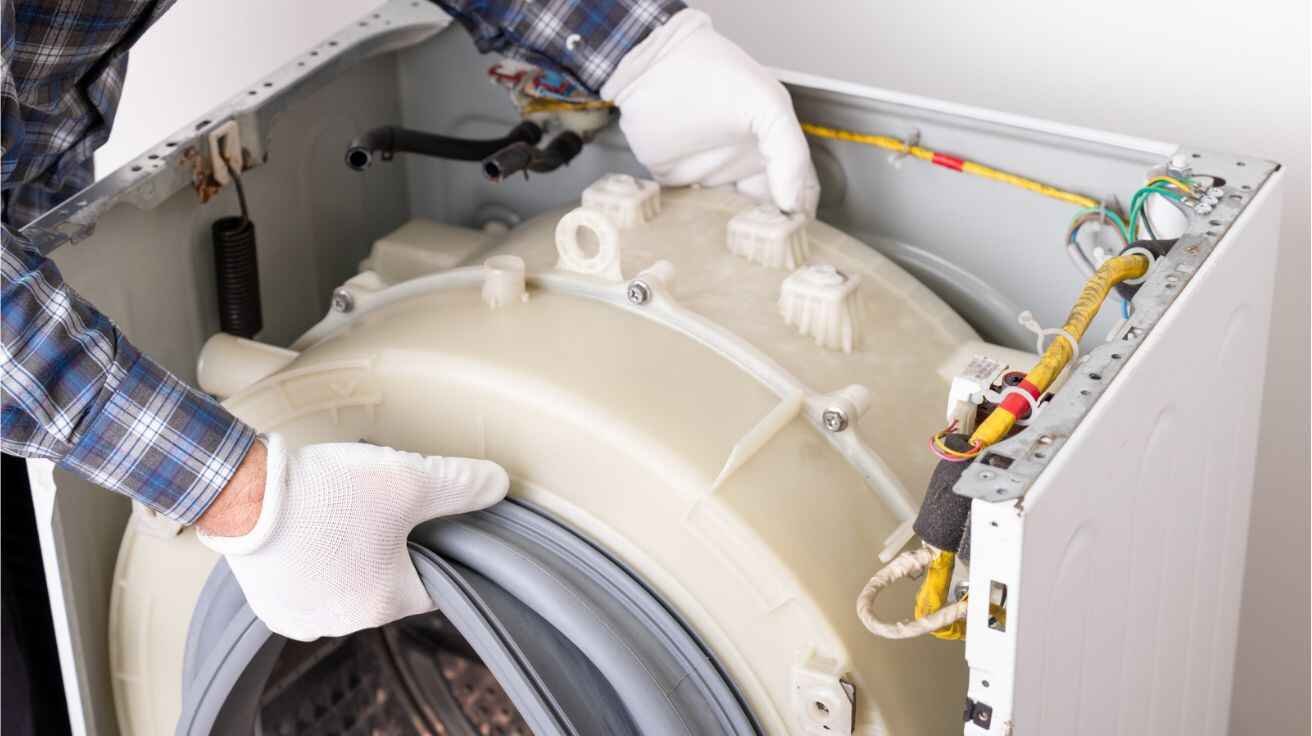
Washing machine drum problems are common, but they should not be ignored. The drum is the main part that holds and moves your clothes during washing and spinning. When it starts making noise, shaking, wobbling, scraping, or failing to spin, it usually means something is wrong inside the machine.
Some problems are simple, such as an unbalanced load or an uneven floor. Others can be serious, such as worn drum bearings, broken suspension parts, a damaged spider arm, or a loose drive belt. If these issues are not fixed early, they can damage the washer, tear clothes, cause leaks, or lead to expensive repairs.
This guide explains the most common washing machine drum problems, their causes, warning signs, and possible fixes.
What Is the Washing Machine Drum?
The washing machine drum is the round basket where clothes are placed. In most washers, there is an inner drum and an outer tub. The inner drum rotates and moves the clothes, while the outer tub holds water.
During the spin cycle, the drum rotates at high speed to remove water from clothes. A healthy drum should spin smoothly, stay balanced, and move only slightly. If it bangs, scrapes, drops, or shakes badly, there may be a mechanical issue.
Common Washing Machine Drum Problems
1. Washing Machine Drum Is Loose
A little movement in the drum is normal because it is supported by springs and shock absorbers. However, if the drum feels very loose, drops down, hits the door seal, or moves too much from side to side, it may indicate a mechanical fault.
Common causes of a loose washing machine drum include worn bearings, broken suspension springs, weak shock absorbers, or a damaged spider arm. If you hear clunking or scraping when moving the drum by hand, stop using the washer and get it checked.
2. Drum Makes a Banging Noise
A banging sound during the spin cycle is often caused by an unbalanced load. Heavy items like towels, blankets, jeans, and rugs can gather on one side of the drum. This makes the washer shake and bang.
To fix this, pause the washer, open the door, and spread the clothes evenly. If the washer is overloaded, remove some items and restart the spin cycle.
If the drum bangs even when the washer is empty, the issue may be worn shock absorbers, damaged suspension rods, loose counterweights, or bad drum bearings. In this case, a technician should inspect the machine.
3. Drum Makes a Grinding or Rumbling Noise
A grinding, rumbling, or roaring sound usually points to worn drum bearings. Drum bearings help the drum rotate smoothly. When they wear out, the washer becomes noisy, especially during high-speed spin.
You can test this by turning the empty drum by hand. If it feels rough or makes a grinding sound, the bearings may be damaged. Bad bearings should not be ignored because they can cause drum movement, leaks, and further internal damage.
4. Washing Machine Drum Is Not Spinning
If the drum does not spin, the problem may be related to the drive belt, motor, door lock, lid switch, blocked drain pump, or control board. Sometimes the washer will not spin if water is still inside the drum.
First, check whether the machine is draining properly. Look for standing water, a blocked filter, or a kinked drain hose. If the washer drains but the drum still does not spin, the belt or motor may need repair.
Overloading can also stop the drum from spinning correctly. Remove some clothes and try a spin cycle again.
5. Drum Wobbles During Spin
A wobbling drum can be caused by uneven laundry, an unlevel washer, worn suspension parts, or damaged bearings. If the washer shakes only with heavy loads, the issue is probably load balance.
Make sure the machine is placed on a flat floor. Adjust the washer feet so all four corners touch the floor firmly. If the wobbling continues even with an empty drum, there may be an internal fault.
6. Drum Scrapes While Turning
A scraping sound may happen when a small object is stuck between the inner drum and outer tub. Coins, bra wires, buttons, clips, screws, and small clothing items can get trapped inside.
Check the drum carefully when the washer is off and empty. Look for sharp edges, loose drum paddles, or visible objects. If clothes are coming out torn, there may be damage inside the drum.
Do not force the drum if it is scraping badly. A trapped object can damage the tub or cause leaks.
7. Drum Paddle Is Broken
Drum paddles, also called lifters, help move clothes during the wash cycle. If a drum paddle becomes loose or broken, it may make clicking or rattling sounds. It can also catch clothes and damage fabric.
A broken paddle is usually cheaper to replace than the full drum. Always buy the correct replacement part for your washing machine model.
How to Diagnose Washing Machine Drum Problems
Before checking the drum, always switch off and unplug the washer.
First, check the laundry load. If clothes are stuck on one side, spread them evenly. Next, check if the washer is level. A washer that rocks on the floor will vibrate during spin.
Then rotate the drum by hand. It should move smoothly and quietly. Grinding, scraping, stiffness, or wobbling are signs of trouble.
After that, gently lift the drum upward. A small amount of movement is normal. But if the drum moves too much or makes a loud clunking sound, bearings or suspension parts may be damaged.
Also inspect the inside of the drum. Look for loose paddles, sharp edges, coins, wires, or anything stuck in the drum holes.
DIY Fixes You Can Try
Some washing machine drum problems can be fixed at home. You can redistribute clothes, reduce the load size, level the washer, clean the pump filter, remove visible objects, and run a drum cleaning cycle.
Avoid washing one heavy item alone. For example, one blanket can easily make the drum unbalanced. Add similar items or use the correct washing program.
Use the right amount of detergent. Too much detergent can create residue, bad smells, and poor washing performance.
When to Call a Technician
Call a professional technician Fix master Appliances if the drum is very loose, makes grinding sounds, leaks water, scrapes when empty, or does not spin after basic checks. You should also get help if the washer shows repeated error codes or moves violently during spin.
Problems like bearing replacement, spider arm damage, motor failure, and sealed drum assembly repair are not simple DIY jobs. They often require special tools and experience.
How to Prevent Drum Problems
To prevent washing machine drum problems, do not overload the machine. Always check pockets before washing clothes. Keep the washer level and clean the drum regularly.
Avoid ignoring strange noises. A small sound can become a major repair if the washer is used repeatedly without inspection.
Also, clean the door seal, detergent drawer, and pump filter regularly. These simple habits can improve washing performance and protect the drum system.
FAQs
Why is my washing machine drum loose?
A little movement is normal, but too much movement may mean worn bearings, broken suspension springs, weak shock absorbers, or a damaged drum support.
Why does my washing machine drum bang during spin?
The most common reason is an unbalanced load. If it bangs even when empty, the cause may be worn suspension parts, loose counterweights, or bad bearings.
Can I use my washer if the drum is loose?
You should not use it if the drum is banging, scraping, leaking, or hitting the door seal. Continued use can cause more damage.
Why is my washing machine drum not spinning?
The cause may be a broken belt, blocked drain pump, faulty motor, door lock issue, overloaded drum, or control board fault.
How do I know if drum bearings are bad?
Bad bearings often make grinding, rumbling, or roaring sounds during spin. The drum may also feel rough or loose when turned by hand.