An automatic washer makes laundry easy, but when it stops draining, spinning, filling, or starts leaking, it can quickly become frustrating. The good news is that many washer problems are caused by simple issues such as clogged filters, unbalanced loads, loose hoses, excess detergent, or incorrect settings. This automatic washer repair guide explains the most common problems, what they usually mean, what you can safely check at home, and when you should call a professional washer repair technician.
Before starting any repair, always unplug the washer and turn off the water supply. Do not open electrical parts, bypass safety locks, or force a locked washer door. Basic troubleshooting is safe, but motor, wiring, control board, and internal pump repairs should be handled by a trained appliance repair expert.
Quick Washer Troubleshooting Table
| Problem | Common Cause | First Check |
|---|---|---|
| Washer won’t drain | Clogged drain hose or pump filter | Clean filter and check hose |
| Washer won’t spin | Unbalanced load or lid lock issue | Balance clothes and restart |
| Washer leaks water | Loose hose, damaged gasket, or pump leak | Inspect hoses and door seal |
| Washer makes noise | Unlevel washer or worn part | Level machine and check drum |
| Washer smells bad | Mold, detergent buildup, moisture | Run cleaning cycle |
| Washer won’t fill | Closed valve or clogged inlet screen | Check water supply |
1. Automatic Washer Won’t Drain
A washer that does not drain usually has a blockage in the drainage system. The most common causes include a clogged drain hose, blocked pump filter, jammed drain pump, or incorrect drain hose position. If water stays inside the drum after the cycle ends, start by selecting a drain/spin cycle.
If the washer still does not drain, unplug it and inspect the drain hose behind the machine. Make sure the hose is not kinked, crushed, or pushed too far into the standpipe. A hose placed too deep can cause siphoning and poor drainage.
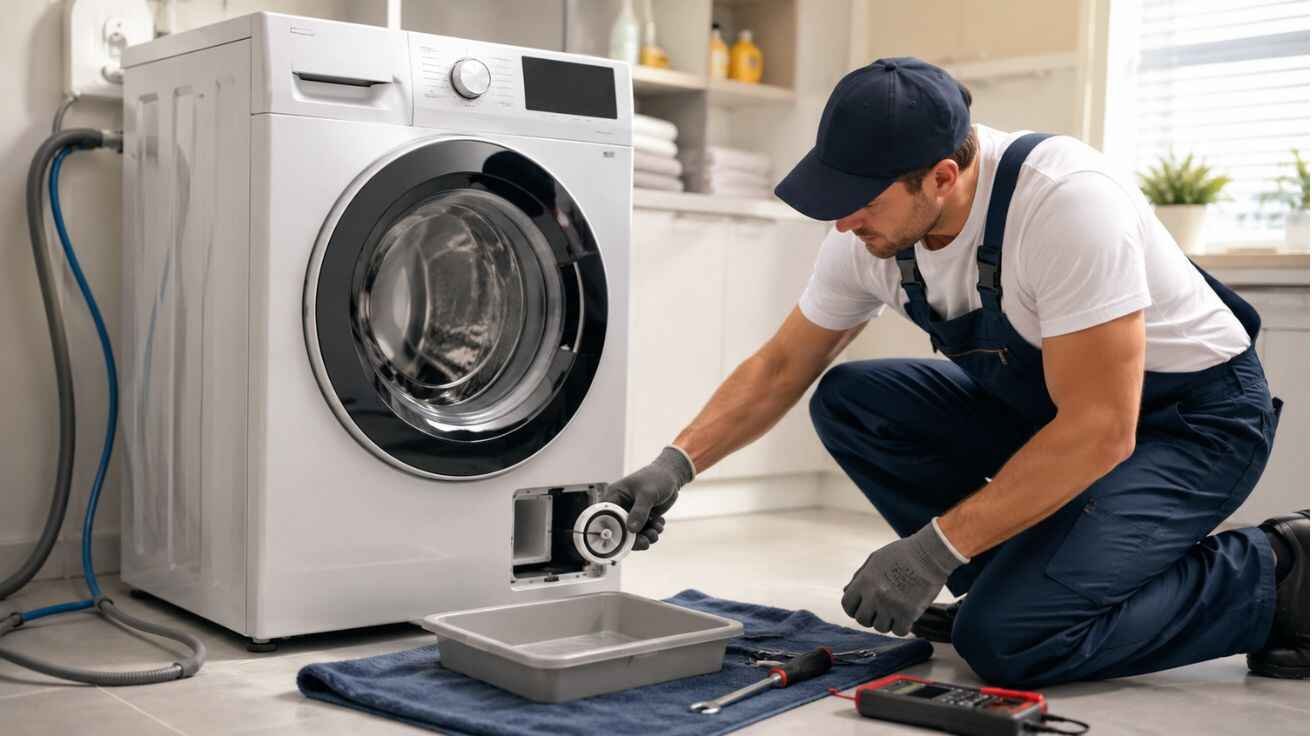
Many front-load washers also have a drain pump filter near the bottom front panel. This filter can collect coins, lint, buttons, hair clips, and small fabric pieces. Place a towel and shallow tray under the filter before opening it because water may come out. Clean the filter, close it properly, and test the washer again.
Call a technician if the washer hums but does not drain, the pump makes grinding noise, or the washer still holds water after the filter and hose are clear.
2. Washer Won’t Spin Properly
If your automatic washer is not spinning, the problem may not always be serious. Washers often stop spinning when the load is too heavy or unbalanced. Towels, blankets, jeans, and rugs can gather on one side of the drum and stop the washer from reaching high spin speed.
Pause the cycle, open the washer, and spread the clothes evenly. If the drum is overloaded, remove some items and restart the drain/spin cycle. Also check the selected wash setting. Delicate, wool, or hand-wash cycles may use a lower spin speed, leaving clothes wetter than expected.
If the washer still does not spin, the issue may be a faulty lid switch, door lock, drive belt, motor, actuator, or control board. Top-load washers often depend on a lid switch, while front-load washers depend on a door lock system. If the washer shows a lock error or clicks repeatedly, professional repair is recommended.
3. Washer Is Leaking Water
A leaking washer should be checked quickly because even a small leak can damage flooring and nearby cabinets. First, identify where the water is coming from. If the leak is behind the washer, inspect the hot and cold water inlet hoses. Tighten loose connections and check rubber washers inside the hose ends.
If water appears near the front of a front-load washer, inspect the rubber door gasket. Lint, hair, detergent buildup, or small objects can prevent the door from sealing properly. Wipe the gasket clean and check for tears.
If water comes from underneath the washer, the problem may be more serious. Possible causes include a damaged drain pump, cracked internal hose, loose tub hose, or worn tub seal. Bottom leaks usually require professional diagnosis.
Also avoid using too much detergent. Excess detergent creates heavy suds, which can cause leaking, poor rinsing, bad odor, and drainage problems. Always use HE detergent if your washer requires it.
4. Washer Makes Loud Noise or Shakes
Some sound during spinning is normal, but loud banging, grinding, scraping, or heavy shaking is not normal. First, check whether the washer is level. Push each corner gently. If the machine rocks, adjust the leveling feet until it sits firmly on the floor.
Next, check the load. A single heavy item can throw the drum off balance. Wash similar-weight items together and avoid overloading the washer. Also check pockets before washing because coins, keys, screws, or small metal objects can create rattling noise.
Different noises can point to different problems. Banging often means an unbalanced load. Humming may mean the pump is trying to drain. Grinding can indicate a worn bearing, pump issue, or motor problem. Squealing may point to a belt or pulley issue.
Call a technician if the drum feels loose, the washer moves across the floor, or the grinding noise continues with a small balanced load.
5. Washer Smells Bad
Bad washer odor usually comes from moisture, mold, detergent residue, and fabric softener buildup. Front-load washers are more likely to smell because the rubber gasket can trap water.
To reduce odor, remove wet clothes quickly after each cycle. Leave the door slightly open so the drum can dry. Clean the door gasket, detergent drawer, and drain filter regularly. Run a washer cleaning cycle once a month or as recommended in your owner’s manual.
Do not use more detergent than needed. Too much detergent leaves residue inside the washer, and that residue can create a musty smell over time.
6. Washer Won’t Fill With Water
If the washer does not fill, first check the water supply. Make sure both hot and cold valves are fully open. Inspect inlet hoses for kinks or twists. If water pressure is low in your home, the washer may fill slowly or show an error code.
Turn off the water and remove the hoses from the washer. Check the small inlet screens where the hoses connect. These screens can collect rust, sand, or mineral deposits. Clean them gently and reconnect the hoses.
If the washer still does not fill, the water inlet valve, pressure switch, or control board may be faulty. These parts usually need professional testing.
Repair or Replace: What Should You Do?
Repair is usually worth it if the washer is not too old and the issue is minor, such as a clogged filter, hose leak, belt problem, drain pump issue, or door lock fault. Replacement may be better if the washer has a bad control board, failed motor, worn bearings, cracked tub, or repeated internal leaks.
A good rule is simple: if the repair cost is close to half the price of a new washer, replacement may be the smarter option. However, if the machine is reliable and the problem is small, repair can save money.
Automatic Washer Maintenance Tips
To prevent future washer problems, do not overload the drum, use the correct detergent, clean the pump filter, keep the washer level, check hoses for cracks, leave the door open after washing, and run a cleaning cycle regularly. Also remove items from pockets before washing and avoid washing heavy rugs if your washer manual does not allow them.
FAQs
Why is my washer not draining or spinning?
Your washer may not drain or spin because of a clogged drain hose, blocked pump filter, unbalanced load, faulty lid switch, bad door lock, or drain pump failure. Check the hose, filter, and load balance first.
How do I reset an automatic washer?
Unplug the washer for one to five minutes, plug it back in, and restart the cycle. Some models also require pressing the power, start, pause, or cancel button. Check your manual for the exact reset method.
Why does my washer fill and drain at the same time?
This often happens when the drain hose is installed too low or pushed too far into the standpipe. Incorrect drain hose placement can create siphoning and pull water out during filling.
Can I repair my washer myself?
You can handle simple tasks like cleaning the filter, checking hoses, leveling the washer, balancing the load, and resetting the machine. Electrical, motor, pump, and control board repairs should be done by a technician.
When should I call a washer repair technician?
Call a technician if the washer leaks from the bottom, trips the breaker, makes grinding noise, shows repeated error codes, does not drain after cleaning, or has a loose drum.