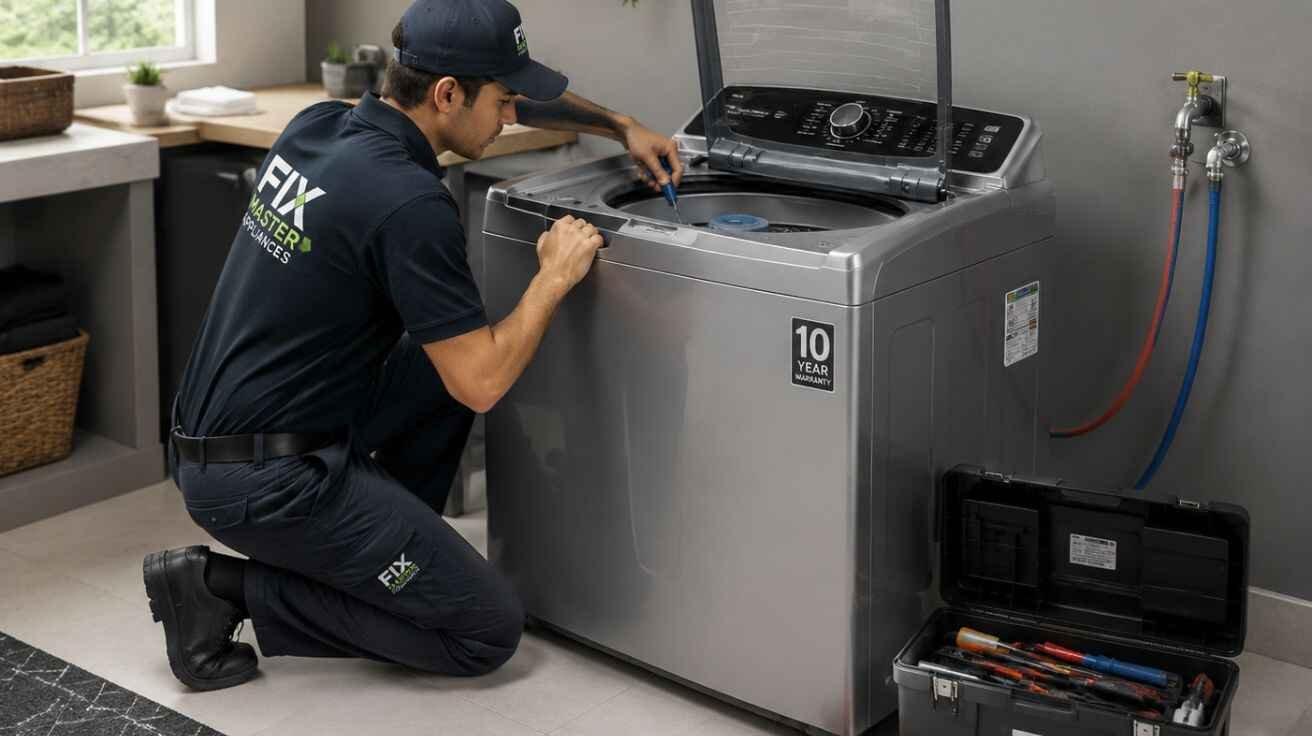
Top Load Washer Troubleshooting is the process of identifying and fixing common problems in a top-loading washing machine such as not spinning, not draining, noise issues, or power failure by checking basic components like power supply, water inlet, drain system, and lid switch.
Understanding Top Load Washer Troubleshooting in Simple Terms
Top Load Washer Troubleshooting is important for every household because washing machines are essential daily-use appliances. When they stop working, even small issues feel like major breakdowns. Most problems are not serious failures but simple faults such as blocked drainage, unbalanced load, or power interruptions.
Modern washers work through a combination of water flow, motor rotation, and electronic control systems. If any one of these systems fails, the machine may stop mid-cycle, make unusual noise, or refuse to start.
Common Problems in Top Load Washer Troubleshooting
One of the most common issues is when the washer does not start. This is usually caused by power supply problems, loose plugs, or a faulty lid switch that prevents operation for safety.
Another frequent issue is when the machine fills with water but does not spin. This is often due to overloading, imbalance in clothes, or motor-related issues. Many users search for “washer not spinning fix” because it is one of the most common household appliance problems.
Drainage issues are also very common. If water remains inside the drum, it usually means the drain hose is blocked or the pump filter is clogged with lint or debris.
Noise, Vibration, and Performance Issues
Excessive noise or vibration usually happens when the load is uneven or the machine is placed on an unlevel surface. In some cases, internal suspension parts become weak, leading to shaking during spin cycles.
Modern washing machines use balance detection systems that slow or stop the cycle when instability is detected, preventing damage to the drum and motor.
Water Flow and Filling Problems
If the washer is not filling with water properly, the issue is usually low water pressure or a clogged inlet valve. Dirt or mineral deposits can block water flow and slow down the entire washing cycle.
Cleaning the inlet filter and checking hose connections often restores normal function. Faulty water level sensors can also cause incorrect filling behavior.
Spin Cycle Failure and Mechanical Issues
When the spin cycle fails, it is often due to a broken lid switch or damaged motor coupling. The washer will not spin unless the lid is fully closed as a safety feature.
Overloading the drum can also stop spinning because the motor cannot handle excessive weight. Worn-out belts or internal components may require replacement in older machines.
Error Codes and Smart Diagnosis
Modern washing machines display error codes that help identify issues quickly. Drainage errors usually point to blockages, while water supply errors indicate inlet problems.
Understanding these codes makes Top Load Washer Troubleshooting faster and more accurate, reducing unnecessary guesswork.
DIY Fixes and Maintenance Tips
Most washer problems can be prevented with simple maintenance routines. Cleaning the drum, removing lint from filters, and using the correct detergent helps improve performance.
Avoid overloading the machine, as it strains the motor and reduces washing efficiency. Regular inspection of hoses also prevents leaks and drainage problems.
A simple reset by unplugging the machine for a few minutes can fix minor system glitches.
When to Call a Technician
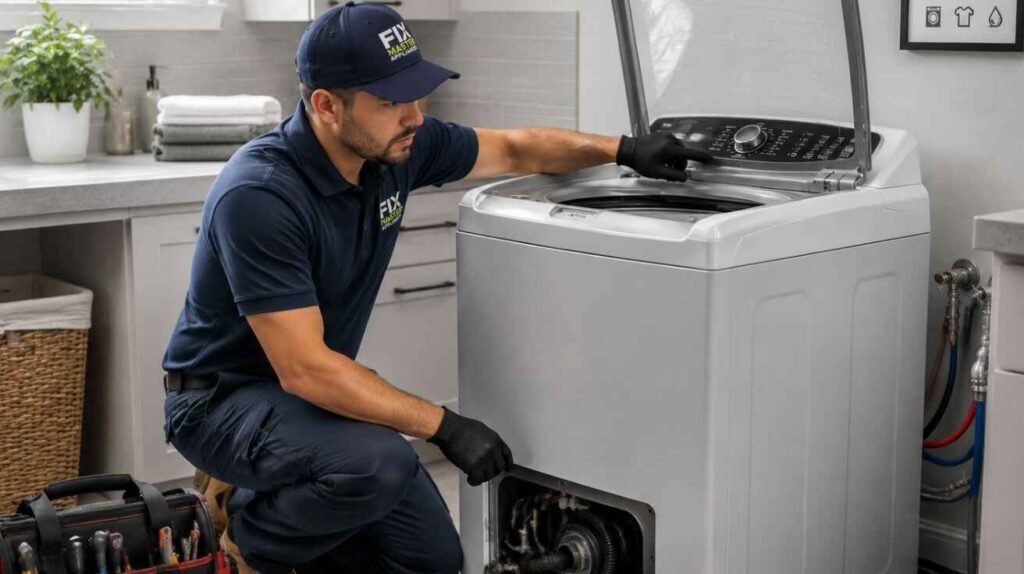
Call Fix Master Appliances for Top Load Washer Repair service if your washer develops electrical faults, emits a burning smell, shows repeated water leaks, produces loud grinding noises, has a drum that will not spin, or continues facing drainage problems even after filter cleaning. While basic DIY maintenance can resolve minor issues, forcing a malfunctioning machine can worsen the damage and lead to higher repair costs.
Conclusion
Top Load Washer Troubleshooting becomes easy when you understand how the system works and follow step-by-step checks. Most issues like drainage failure, spinning problems, noise, or water supply errors can be fixed with simple inspection and maintenance.
With proper care and timely cleaning, you can extend the life of your washing machine and avoid costly repairs while improving performance.
FAQs – Top Load Washer Troubleshooting
1. Why does my top load washing machine stop mid cycle?
This usually happens due to power fluctuations, faulty lid switch, or drainage blockage. In many cases, resetting the machine or checking the lid sensor restores the cycle.
2. How do I fix a top load washer that is not draining water?
A clogged drain hose or blocked pump filter is the most common reason. Cleaning the filter and removing lint or small objects usually solves the issue quickly.
3. Why is my washing machine shaking violently during spin cycle?
This is caused by unbalanced clothes, uneven flooring, or worn suspension parts. Redistributing clothes and leveling the machine usually fixes the problem.
4. What causes a top load washer not to start at all?
Common causes include power supply issues, tripped circuit breaker, loose plug connection, or a faulty lid switch that prevents operation for safety.
5. How do I reset a top load washing machine properly?
Unplug the washer from the power source for 5–10 minutes, then plug it back in. This clears minor system errors and resets the control board.